

The lost art of...yapping 💬
Bharat Forge holds strong, Another AI-space collab, and Shakeup in football world.
🗓️ Morning, folks! ☀️
Moms, you can finally say “I told you so.” Turns out, our phones might actually be the problem 😰

A new study found that people are speaking nearly 30% fewer words a day than they did in the late 2000s.
Researchers analysed 22 studies covering 2,197 people and found daily speech dropped from 15,959 words in 2007 to 12,792 today. The decline is even steeper among people under 25.
So where did all those words go? Enter “me-maxxing”, our obsession with saving time.
Food delivery, grocery apps, and self-checkouts may make life easier, but they also erase dozens of tiny conversations that once helped us feel connected.
The fix might be surprisingly simple: give a slightly longer answer to ‘How was your day?’ Those extra 30 seconds could matter more than you think.

Back to business.
Markets ended in the green on Monday, but holding on to gains was apparently too much commitment.
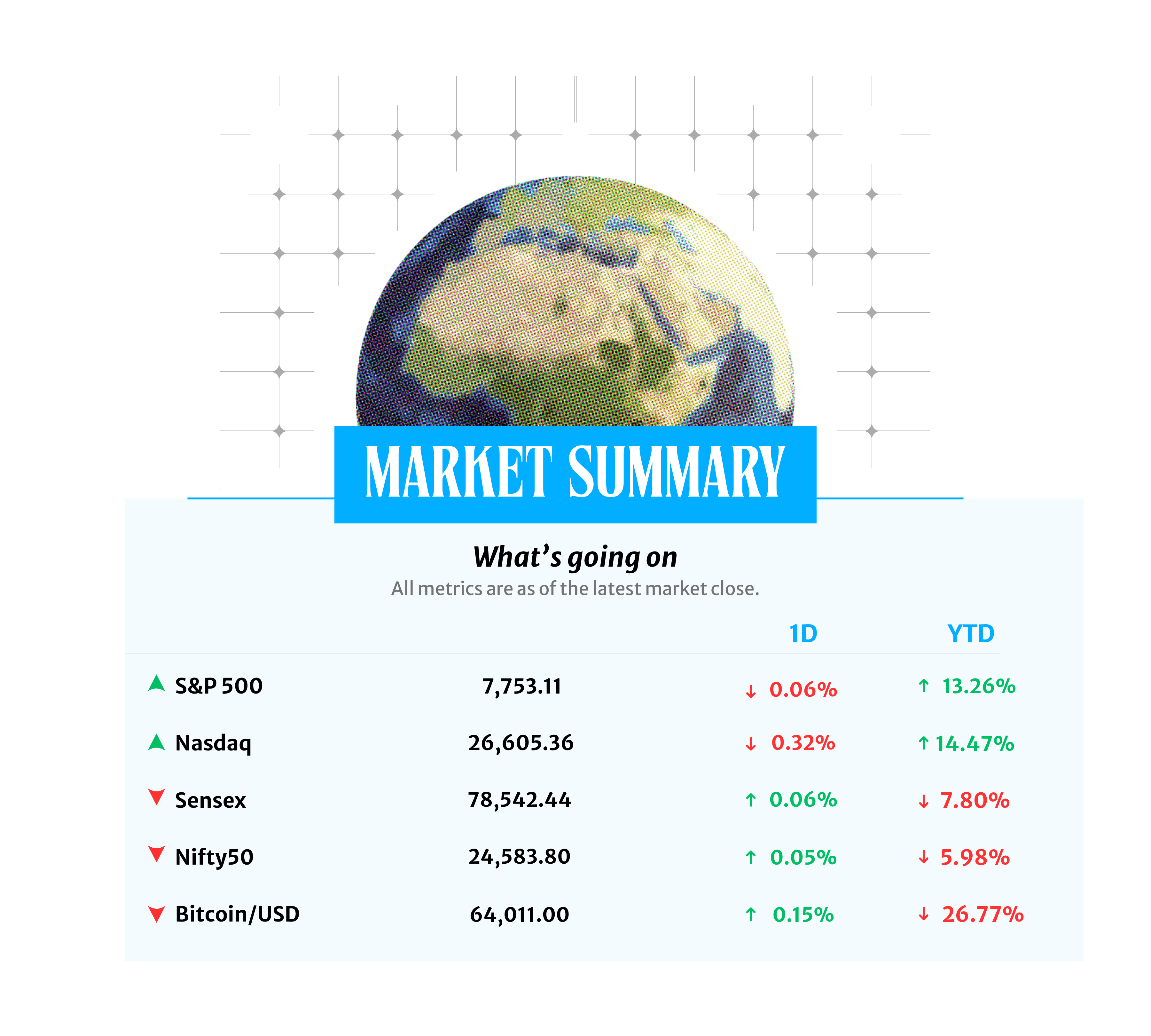
Sensex and Nifty gave up a chunk of their intraday gains as investors continued getting used to the new Closing Auction Session (CAS), with Nifty eventually settling below 24,600.
Realty, consumer durables and private banks had a decent day, while PSU banks, oil & gas and infra stocks chose the red side.
💡 Spotlight: UPI growth humbled by 10 percentage points 📉
If you are a serial QR code scanner, this one is for you.
In the first four months of FY27, UPI transaction volumes grew 23.5%, compared with 33.5% a year earlier. Between April and July, UPI processed 92 billion transactions, up from 74.5 billion in the same period last year.
The slowdown has been building for a while. UPI’s volume growth fell to nearly 30% in FY26, from 41% in FY25.
That brings up a bigger question: should UPI remain free?
The government is reportedly considering a 0.25-0.30% fee on high-value transactions by large merchants, called MDR or Merchant Discount Rate.
Payment companies say bringing back a small fee could help them invest in customer acquisition and merchant expansion. Supporters of zero MDR, however, argue that keeping UPI free helps drive wider adoption.
Let’s hit it! 💪🏻
1 Big Thing: Why Bharat Forge crashed 7% after Q1 📉
Bharat Forge shares crashed around 7% after the company slipped into a loss in the June quarter, even as revenue continued to grow.
Note: the company took around ₹358 crore of exceptional charges during the quarter because of multiple one-time events.
One-offs are unusual expenses that don’t normally happen every quarter but can temporarily pull down profits.
The numbers:
Net loss: ₹90 crore vs ₹284 crore profit last year
Revenue: ₹4,640 crore, up 18.7% YoY
EBITDA (operating profit): ₹709.4 crore vs ₹670 crore
Margin: 15.29% vs around 17% last year
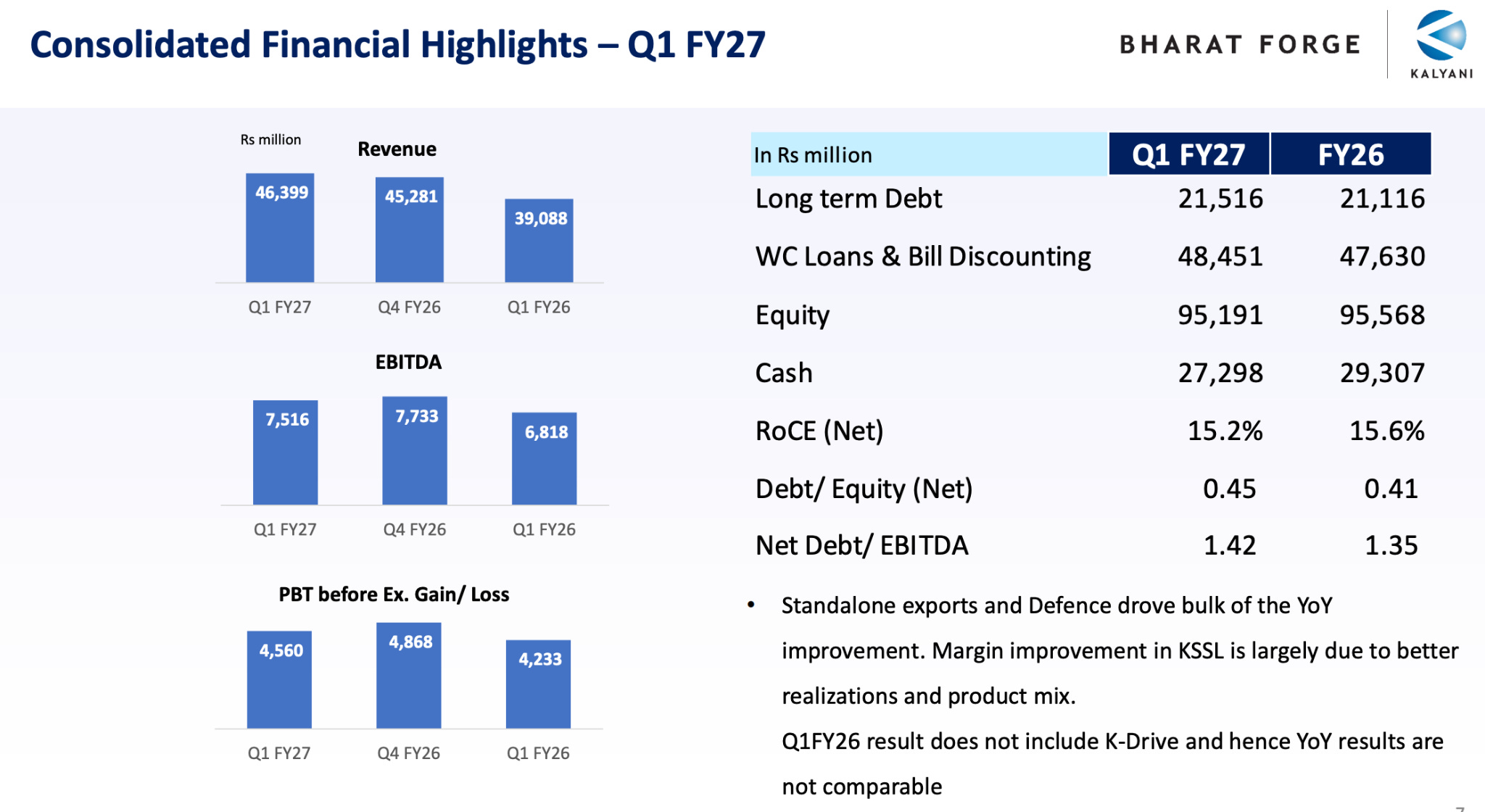
What is management saying: for its Indian manufacturing business, Bharat Forge expects 20-25% growth in FY27. Defence, aerospace, data centres and semiconductors are where a lot of new money is going.
Bharat Forge plans to invest around ₹1,800 crore over the next 12-18 months to build dedicated forging and machining facilities for these newer businesses.
This includes an energetics facility in Andhra Pradesh. These factories won’t contribute meaningfully immediately, but management expects them to generate additional revenue once they become operational.
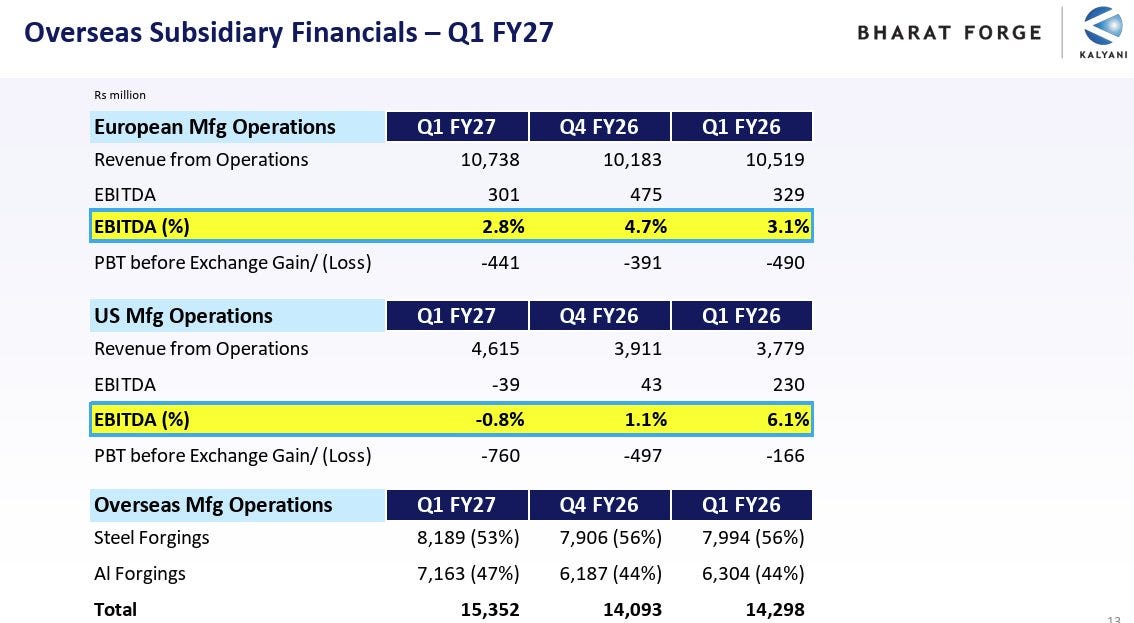
This strategy isn’t entirely new. Management had already identified aerospace and defence as major growth engines entering FY27, while flagging profitability at some overseas businesses as something investors needed to watch.
2. AI deal lifts smallcap stock 🚀
Small-cap stock Blue Cloud Softech Solutions surged as much as 13% intraday after its subsidiary signed a $150 million deal with SpaceX International.
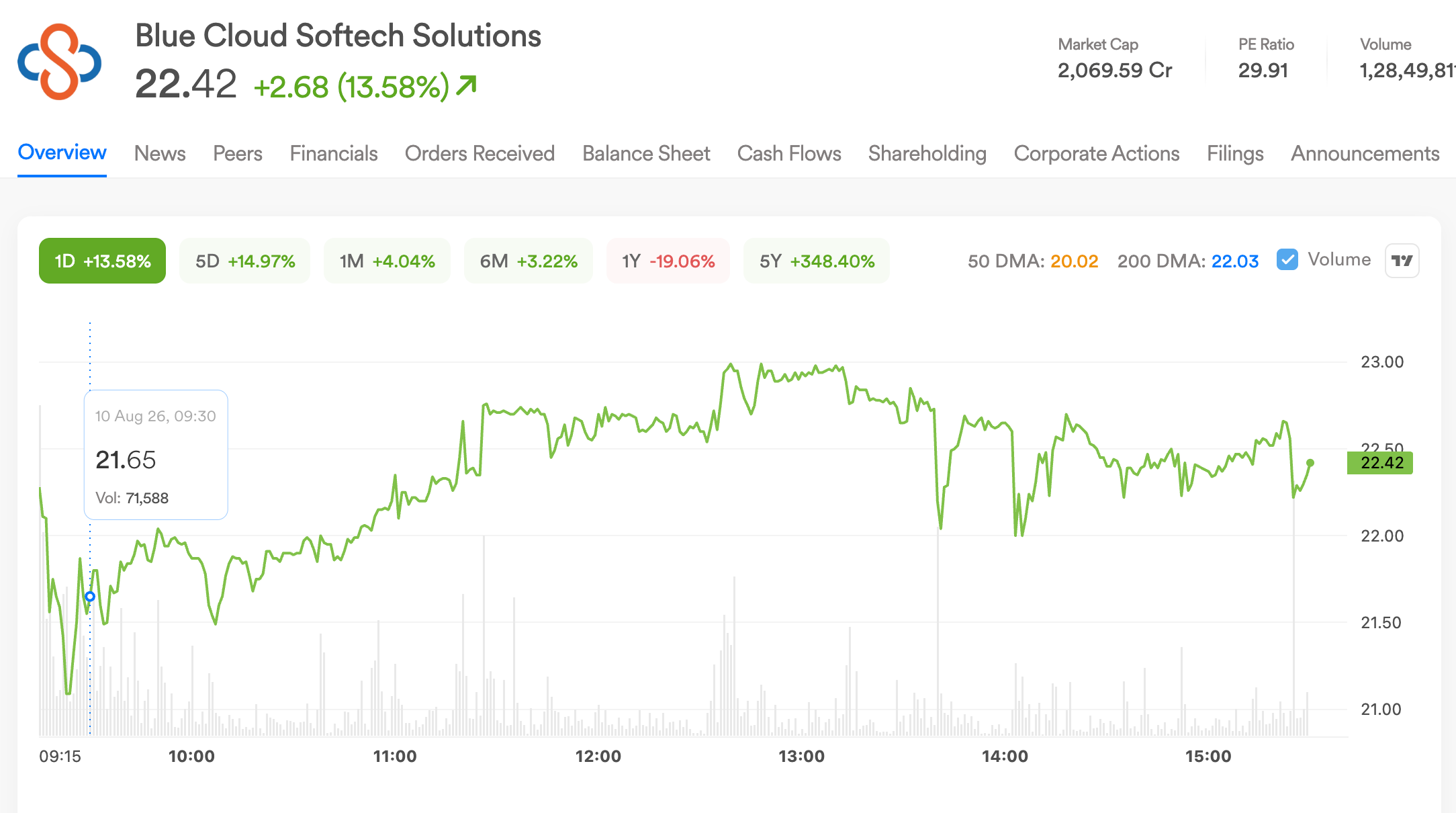
FYI: SpaceX International is not Elon Musk’s aerospace company, Space Exploration Technologies Corp. (SpaceX).
The why: Blue Cloud will design, build, integrate, secure, connect, and operate an AI computing and data centre platform for SpaceX International.
The work is split across four segments:
AI infrastructure: $70 million
Cybersecurity: $25 million
Telecommunications: $25 million
Data centre solutions: $30 million
The project also includes building GPU and accelerator clusters, setting up infrastructure for machine learning operations and AI model deployment, and establishing a Security Operations Centre with advanced cybersecurity systems.
Background: this isn’t the first time the stock has rallied on this news. Back on June 22, Blue Cloud Softech jumped 20% after announcing it was evaluating potential AI business opportunities with SpaceX International.
3. Your next shopping partner 👀

AI is changing how people shop for electronics. Around 83% of shoppers now use AI in some way, with 58% already relying on it for product research and another 31% open to trying it.
Nearly 68% have used an AI shopping tool in the past three months, mainly for research. But trust remains limited. Around 86% still verify AI recommendations elsewhere before buying, with 45% saying they always double-check.
The trend is pretty clear: AI isn’t replacing the final purchase decision. It’s simply turning hours of research across multiple tabs into a single conversation.
4. DIIs are taking over India’s stock market 📈

Domestic institutional investors (DIIs) have invested a record ₹5.1 lakh crore in Indian equities in 2026 already. And we are only in August.
This is the third straight year domestic institutional investment has crossed ₹5 lakh crore.
Since August 2023, DIIs have poured ₹19.2 lakh crore into Indian stocks, while foreign investors sold nearly ₹10 lakh crore.
And much of this domestic firepower ultimately comes from us through SIPs, insurance premiums and pension contributions.
5. Stocks that kept us interested 🚀
What went up ⬆️
📈 Hitachi Energy India surged close to 11% after strong Q1 earnings, leading midcap gainers as brokerages turned bullish on power infrastructure growth.
⚡Bajel Projects gained after winning Power Grid orders worth over ₹700 crore, boosting investor sentiment and lifting the stock.
💳 Paytm rose close to 10% after Bernstein raised its price target to ₹2,200, the highest on Dalal Street, maintaining an Outperform rating.
💼 Info Edge jumped over 4.5% after its Q1 net profit jumped 43% to ₹490 crore, while operating revenue rose 11% YoY to ₹881 crore.
🚀 Pine Labs gained 5% on updates around Merchant Discount Rate (MDR) on UPI transactions.
What went down ⬇️
📉 SBI slipped 2% after opening higher, as investors booked profits despite the bank reporting better-than-expected Q1 FY27 earnings.
🔻REC and PFC fell up to 8% after CLSA cut price targets, despite retaining its Outperform rating following mixed Q1 results.
📡 Astra Microwave Products tumbled close to 6% as it reported weaker Q1 profit, revenue and EBITDA, while net profit fell 25% YoY.
What else are we snackin’ 🍿
⚽ Liverpool deal: Amazon founder Jeff Bezos is reportedly nearing a deal to buy a stake in Liverpool FC as part of an investor consortium that also includes Amit Bhatia and Eduardo Saverin.
⚡ Renewables acquisition: CESC arm Purvah Green Power will acquire six ReNew Solar Power companies for ₹4,859 crore, boosting its contracted capacity from 3.4 GWp to 4.8 GWp.
💉 CDMO deal: Gland Pharma signed a strategic manufacturing deal covering 55 injectable SKUs, with potential annual revenue of $90–100 million once commercialisation begins in 2029.
🤝 HPCL partnership: RITES signed an MoU with HPCL to collaborate on infrastructure and consultancy opportunities, expanding its partnership with the state-run energy major.
That’s a wrap! Don’t let the weekday blues get to you.
And if you’d like to place your brand on this newsletter, let us know.

Hit that 💚 if you liked this issue.
Disclaimer: This newsletter is for informational and research purposes only. Nothing here should be considered financial, investment, legal, or professional advice.
The UPI slowdown and the MDR debate are closer than they look. Growth decelerating from 41% to 33.5% to 23.5% is what you'd expect as penetration matures, and a maturing free rail is exactly when the question of who pays for the next expansion has to be answered. Payment companies asking for 0.25% now rather than two years ago is the same signal the volume numbers are giving, arriving through a different channel.
Insightful.