

Q4 glitter meets growth 🚀
Tata’s Bhutan bet, Agro giant retreat, and India’s sulphur risk.

🗓️ Morning, folks and Happy Mondayyy! ☀️
Markets head into the new week with geopolitics back in sharp focus.
Investors across the globe are closely tracking developments around the ongoing U.S.-Iran tensions, especially Iran’s response to the latest proposal from Washington aimed at easing the conflict.
Donald Trump said the U.S. expects Tehran’s response later tonight, keeping traders on edge.
Back home, Indian investors will also be watching key macroeconomic data this week.
Consumer inflation (CPI) numbers are due tomorrow, May 12, while Wholesale Price Index (WPI) inflation data will be released on Thursday.
The readings could influence expectations around interest rates, liquidity, and the RBI’s policy stance in the coming months.
Let’s hit it! 💪🏻
1 Big thing: Titan sparkles despite margin pressure ✨
Titan delivered a sparkling Q4, led by booming jewellery sales and strong consumer demand, even as gold prices remained sky-high.
Quick snapshot: the Tata Group company beat revenue expectations, sending the stock nearly 5% higher, though margins and EBITDA missed estimates.
Net profit: up 29.2% YoY at ₹1,124 cr vs ₹870 cr
Revenue: up 77.6% YoY at ₹23,934 cr vs ₹13,477 cr
EBITDA: up 19.3% YoY at ₹1,715 cr vs ₹1,438 cr
Margin: at 7.2% vs 10.7% last year
What worked: Jewellery remained the star performer, with the segment growing 50% to around ₹18,195 crore.
Titan’s key brands, Tanishq, Mia and Zoya, together clocked 48% growth at ₹16,047 crore.
Gold ingot sales also added a massive ₹6,144 crore to the topline.
The watches business saw mixed trends. Analog watches grew 15%, while smartwatch sales plunged 50% as demand in the segment softened.
Management also flagged concerns around global uncertainty and geopolitical tensions.
While we are on earnings 📈,
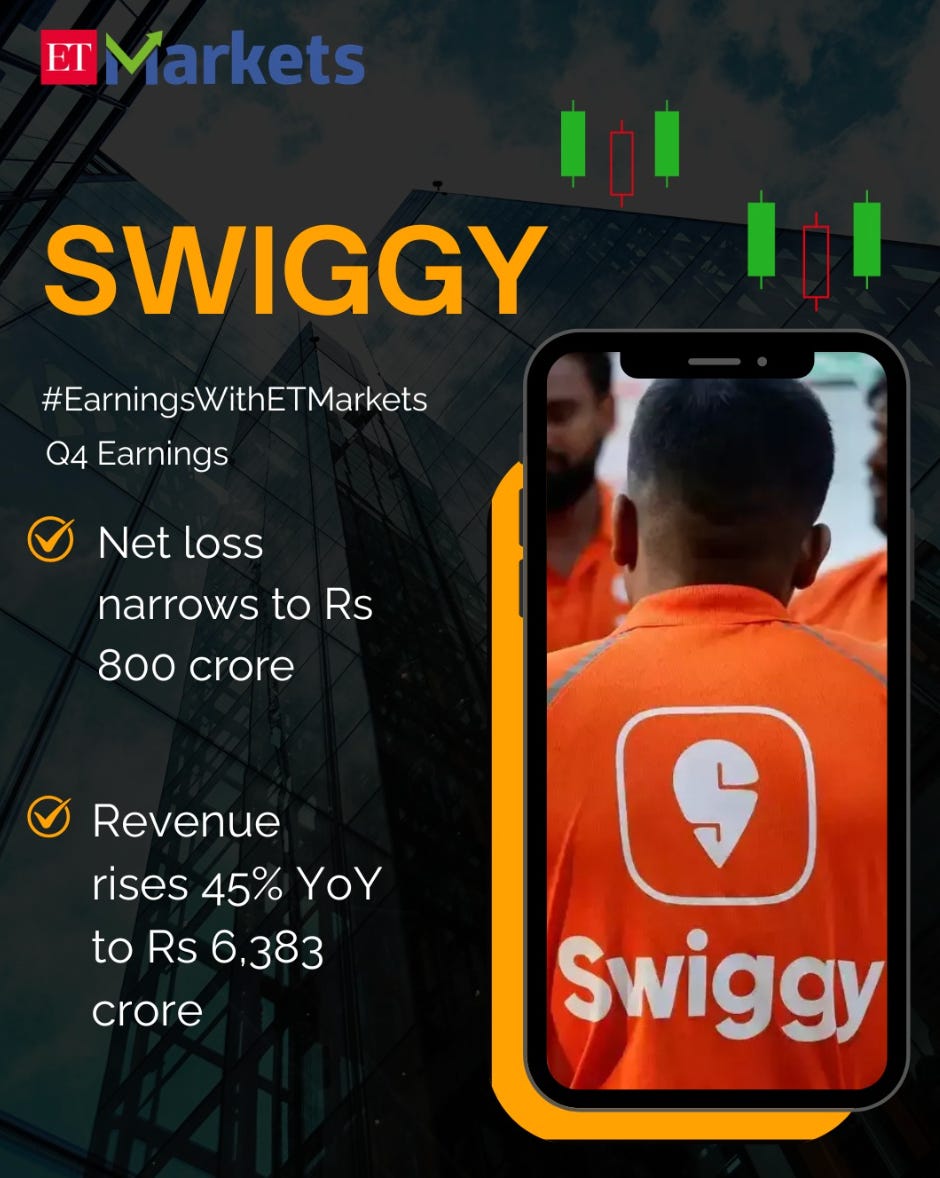
Swiggy’s losses are shrinking, but the company is still burning cash to win the quick-commerce race.
By the numbers: for the March quarter, Swiggy reported:
Net loss: ₹800 crore, improving from ₹1,081 crore last year
Revenue: up 45% to ₹6,383 crore
Key driver: food delivery, which saw its fastest growth in nearly four years.
Its revenue rose to ₹2,075 crore, while the segment crossed ₹1,000 crore in annual adjusted EBITDA, showing stronger profitability.
Quick commerce, however, remains expensive.
Instamart’s orders jumped nearly 69% to ₹7,881 crore, but the business still reported a loss of ₹736 crore.
2. Agrochemical giant makes India exit 💸
Global agrochemical major FMC Corporation is stepping back from a big part of its India business.
What’s happening: the company has signed a $252 million deal to sell its India crop protection business to Crystal Crop Protection.
Last year, FMC had already hinted that it wanted to focus more on faster-growing global markets while changing the way it operates in India.
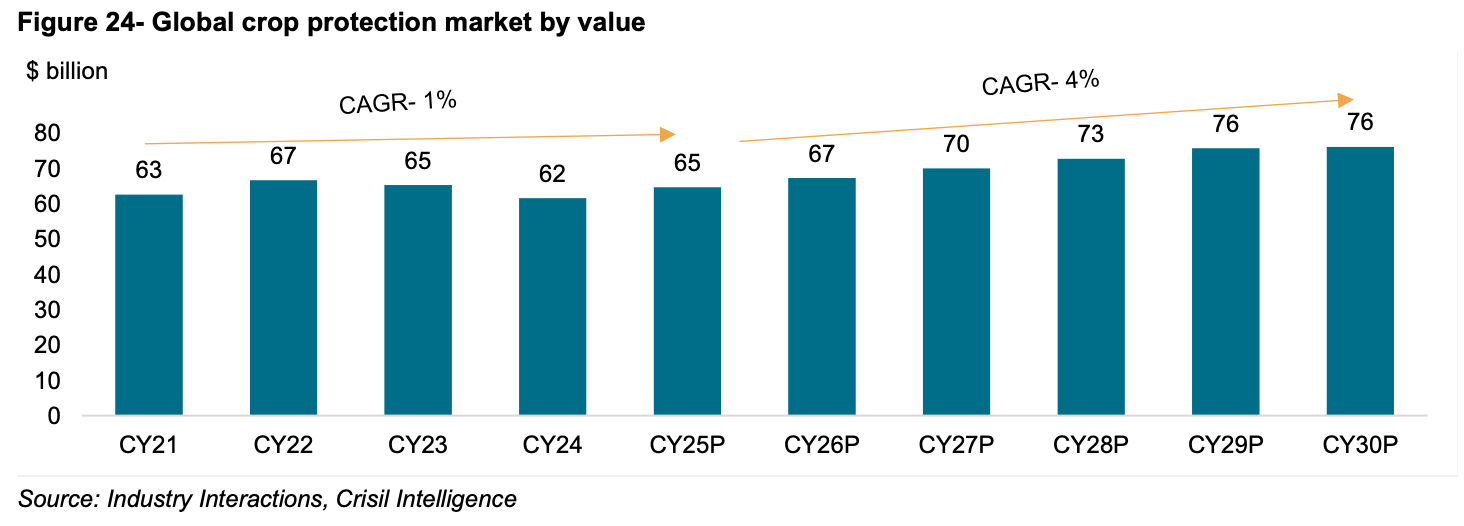
Big picture: India’s crop protection market has become increasingly tough for global players. Pricing pressure, cheaper generic products, and weaker demand have squeezed revenues and margins across the industry.
3. Tata Power taps Bhutan’s rivers ⚡
Tata Power is expanding its Bhutan clean energy partnership by adding a new 404 MW hydropower project to its growing pipeline.
In simple terms, the Nyera Amari I & II project will use flowing river water to generate electricity. The ‘404 MW’ part simply means the project can produce enough power to supply electricity to lakhs of homes.
More deets: Tata Power and Bhutan’s Druk Green Power Corporation (DGPC) have expanded their partnership, taking the total planned hydropower capacity from 4,500 MW to 5,033 MW.
Bhutan is rich in fast-flowing rivers, making it perfect for hydropower generation.
The country already exports electricity to India, and hydropower is one of its biggest economic strengths.
Why Tata Power: building large hydropower projects requires huge capital, engineering expertise, and long-term power management capabilities.
Tata Power has become one of the key players India is relying on for regional clean energy expansion.
4. Is sulphur shortage real? 🧐

India imports nearly 80-90% of its sulphur from the Middle East, and most people have no idea why that matters.
But this one chemical powers India’s fertiliser industry, food production and several major industries.
Now, with fresh shortage warnings and rising global supply risks, a hidden dependency is starting to look like a serious national vulnerability.
5. Why does the world need more gas turbines?
AI data centres are running out of electricity.
And the world doesn’t have enough gas turbines to generate more power.
AI data centres need stable 24/7 electricity, and gas turbines are currently one of the fastest ways to produce reliable power at scale when grids and renewable capacity can’t keep up.
Global turbine orders have crossed ~110 GW, while manufacturing capacity is stuck at just 60-70 GW.
The bigger problem? These turbines are incredibly difficult to manufacture. Some critical turbine blades take over a year to produce and require advanced metallurgy that only a handful of companies globally can handle.
As AI power demand explodes, the bottleneck is shifting from chips to electricity infrastructure.
6. Stocks that kept us interested 🚀
What went up ⬆️
💻 Sonata Software surged 9%, in response to its Q4 results. This is the biggest single-day gain for the stock in a month.
🔥 Thermax shares jumped 8% as Q4 profit rose 19%, order book strengthened.
🏗️ NBCC bagged an order worth ₹252.8 crore from Odisha School Education Programme Authority, stock went up more than 4%.
🌿 Dabur India rose nearly 4% after the company posted strong March quarter earnings.
What went down ⬇️
💧 Shakti Pumps tumbled 8% as Q4 profit dropped 65% YoY.
🍪 Britannia shares fell more than 5% as firm warned about price hikes.
☀️ Vikram Solar announced a mixed quarterly performance, with margins and profit falling short of expectations, stock went down nearly 5%.
What else are we snackin’ 🍿
⚖️ Tariff blow: a US court ruled Trump’s 10% global tariffs illegal, saying the measures were unauthorised and exceeded presidential powers.
⚡ Cell approval: Ola Electric received government certification for its Bharat Cell-powered S1 X+ 5.2 kWh scooter using 4680 battery technology.
🔋 BESS order: Pace Digitek secured a ₹702 crore order from DVC for a 250 MW/500 MWh battery energy storage project in Jharkhand, including EPC and long-term O&M work.
🏭 Project win: L&T secured a significant order for a coal-to-ammonium nitrate project in Odisha, marking its second major order win this week.
That’s a wrap! Don’t let the Monday blues get to you.
And if you’d like to place your brand on this newsletter, let us know.
Hit that 💚if you liked this issue.