

Melody maker eyes IPO ⭐
Defence goes high-tech, HCLTech’s AI jackpot, and government’s tech gap.

🗓️ Morning, folks and Happy Mondayyy! ☀️
Now before we get started, in our latest episode of This Is Business, Tanvi Dessai sat down with Lal Chand Bisu, Founder & CEO of Kuku FM, to understand how they built one of India’s largest storytelling platforms for users beyond the English-speaking internet.
The conversation covers microdramas, AI-generated content, regional languages, and what the next wave of India’s internet could look like.
🎥 Watch it here 👇🏻
Moving on, this week isn’t packed with heavy economic data, but there’s still plenty to watch.
Investors will keep a close eye on the US-Iran talks, as any progress towards a formal deal could keep crude oil prices in check.
The Q1 earnings season also kicks off this week, with TCS becoming the first major company to report its results on July 9.
On the policy front, PM Modi will visit Indonesia, Australia and New Zealand from July 6-11. The country is also looking to wrap up free trade agreement (FTA) negotiations with Canada, Mexico and Brazil over the next six months.
💡 Spotlight: India goes shopping for modern warfare 🛡️
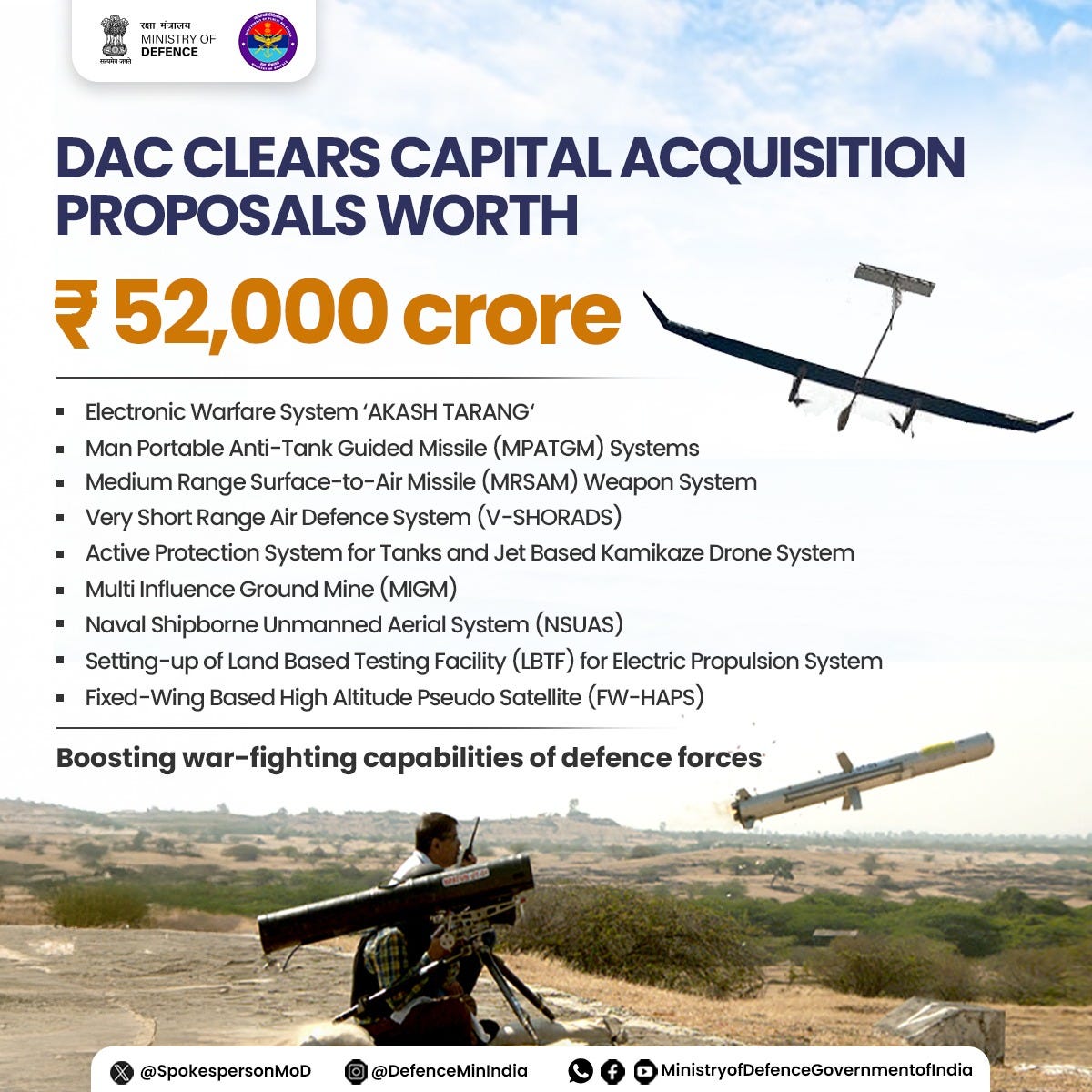
The Defence Acquisition Council, headed by Defence Minister Rajnath Singh, has approved procurement proposals worth about ₹52,000 crore for the Army, Navy and Air Force.
For the Army, the big approvals include Akash Tarang anti-drone systems, man-portable anti-tank guided missiles, medium-range surface-to-air missiles, very short-range air defence systems, active protection systems for tanks, and jet-based kamikaze drones.
The Navy gets multi-influence ground mines, shipborne unmanned aerial systems and a land-based testing facility for electric propulsion systems.
That means better maritime surveillance, stronger control over sea routes, and testing support for future naval platforms.
The Air Force gets approval for fixed-wing high-altitude pseudo satellites, or FW-HAPS.
Think of them as aircraft-like platforms that can stay high in the sky for long periods and help with surveillance, communication and remote sensing.
Let’s hit it! 💪🏻
1 Big thing: AI payday for HCLTech 💸
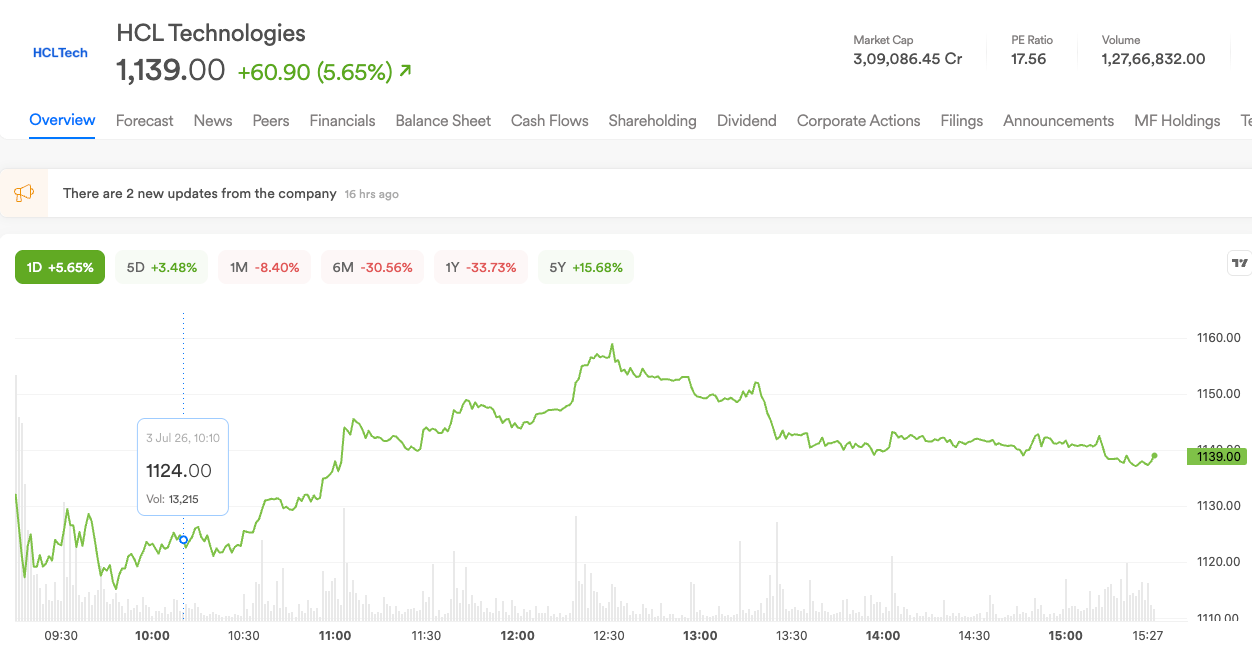
HCLTech landed one of the biggest IT deals of the year. The company won a $1.14 billion contract from a Europe-based Fortune Global 50 company to build and manage an AI-powered digital workplace and enterprise network.
The deal will run from July 2026 to December 2031, with an option to extend it by another five years.
Why is this a big deal: this is the largest contract HCLTech has announced since its $2.1 billion Verizon deal in 2023. It also guarantees roughly $228 million in annual revenue, which could add around 1.6% to its FY27 growth.
This deal comes at a time when IT companies are facing slower demand. The rise of AI and automation has reduced the need for many traditional IT services, while global uncertainty has made companies more cautious about technology spending.
There’s another interesting angle.
HCLTech has consistently stayed ahead of the AI curve.
According to CLSA, HCLTech was among the first Indian IT companies to warn that AI would put pressure on pricing.
It also partnered with OpenAI ahead of many of its peers and invested in Sarvam AI.
The deal also comes just days before HCLTech announcing its Q1 FY27 results on July 13. The company has guided for 1-4% revenue growth this financial year, and this contract could provide an early boost to that outlook.
2. Boost to rural fintech 🏦
Digital services company BLS E-Services acquired fintech firm Atyati Technologies for ₹157 crore in an all-cash deal, taking full ownership of the company.
What they do: Atyati helps banks offer digital banking, small loans and other financial services, especially in rural India.
BLS E-Services helps people in semi-urban and rural India access banking, government and other essential digital services through a large network of local service centres and banking agents.
Why does this matter: the acquisition expands BLS E-Services’ banking partnerships, strengthens its AI capabilities and broadens its rural reach.
The bigger picture: deals like these could help accelerate financial inclusion even further.
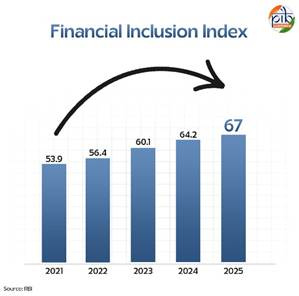
The progress is already visible, with the RBI's Financial Inclusion Index rising from 64.2 in March 2024 to 67.0 in March 2025, reflecting better access to financial services, higher usage, and improving financial literacy across the country.
While we are on acquisitions 🤝,
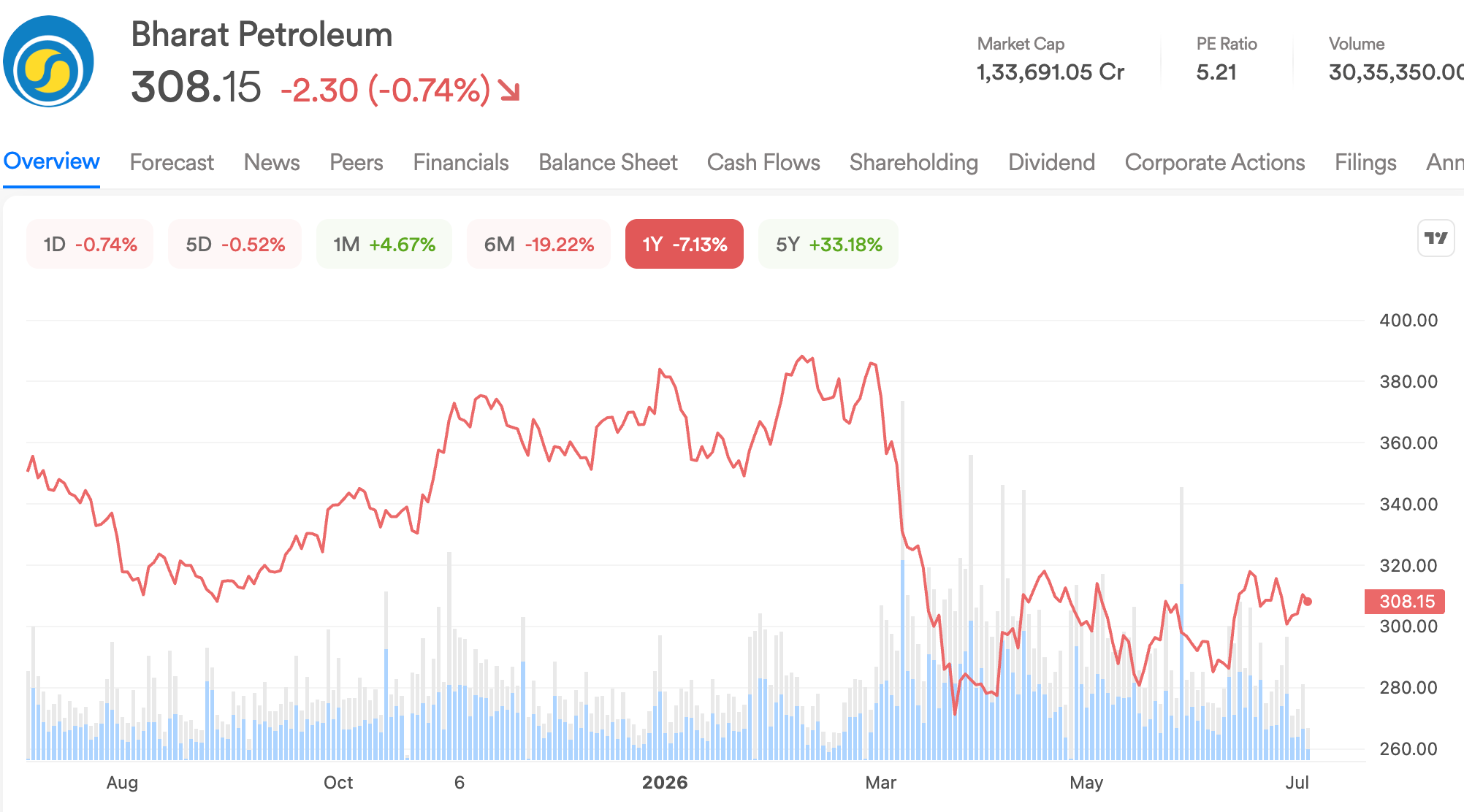
Bharat Petroleum Corporation Limited (BPCL)’s subsidiary, BPRL Ventures BV, will acquire the remaining 34.6% stake in IBV Brazil Petroleo Limitada from Videocon Energy Brazil Limited (VEBL).
What’s happening: IBV owns a 40% stake in BM-SEAL-11 oil and gas block, a large offshore oil and gas project located about 100 km off Brazil’s coast. The remaining 60% is owned by Brazil’s state-run energy company, Petrobras.
The project is still being developed, but once it starts producing oil and gas, it is expected to become an important source of energy.
Why does this matter: the BM-SEAL-11 project could add around 1 million tonnes of oil equivalent (Mtoe) to its annual production once it starts producing oil.
Since India imports nearly 90% of the crude oil it consumes, owning stakes in overseas oil fields gives Indian companies direct access to future oil production, reducing dependence on volatile global markets.
3. Parle-G is eyeing a public debut 💸
We grew up dunking Parle-G in chai. Soon, we might be able to own a piece of the company behind it.
What’s buzzin’: according to reports, Parle Products, the maker of iconic brands like Parle-G, Melody and Mango Bite, is preparing for a $1 billion-plus IPO next year, targeting a valuation of $10.5 billion.
According to the 2025 Burgundy Private Hurun India 500 Report, it is India’s 7th most valuable unlisted company, with an estimated valuation of ₹75,420 crore.
A listing would also create an interesting comparison between Parle and Britannia on Dalal Street.
In FY25, Parle Products’ revenue rose 8.5% to ₹15,568 crore, even though profits came under pressure as competition in the biscuit and confectionery market intensified.
Big picture: according to IBEF, India’s biscuit, cookies and crackers market was worth ₹1.16 lakh crore in 2025 and is expected to grow to ₹1.64 lakh crore by 2030.
4. Why are Indian govt websites so bad? 👎

India’s digital woes aren’t really a technology problem. They’re a governance problem. The issue isn’t a lack of skilled IT firms, but how government tech projects are run.
Non-technical officials often outsource both the planning and execution, leaving the government with little understanding of the systems it buys or how to improve them over time.
Better websites alone won’t fix this. What needs an upgrade is the way digital projects are planned, managed and owned from within the government.
5. Stocks that kept us interested 🚀
What went up ⬆️
💰 Muthoot Finance jumped over 3%, while Manappuram and Hindustan Zinc also gained as gold and silver rallied.
💍 PC Jeweller went up more than 4% after the company claimed it expects to become debt-free this quarter.
🏥 BlueSpring arm bagged a ₹1,437 crore O&M contract from Vedanta Aluminium, sending the stock nearly 4% higher.
🏗️ Raymond Realty zoomed 7% as Q1 pre-sales more than doubled and it maintained its FY27 margin guidance.
What went down ⬇️
🛒 Avenue Supermarts tumbled nearly 5% after its Q1 business update disappointed investors.
🛡️ PB Fintech fell nearly 6% after a ₹1,741 crore block deal saw 1.08 crore shares change hands.
🏦 Union Bank of India dropped more than 6% after its Q1 business update showed a marginal quarter-on-quarter decline in global business.
What else are we snackin’ 🍿
🥤 IPO talks: Coca-Cola has begun banker presentations for the proposed India IPO of its bottling business, with formal discussions scheduled for August 9-10 in London.
🌬️ Green energy: Tata Motors partnered with Welspun Renewable Energy to develop an 86 MW wind-solar hybrid project, supporting its clean energy and decarbonisation goals.
⚡ Power stocks: CG Power and Hitachi Energy fell up to 8% after the Centre allowed four Chinese-linked power equipment firms to bid for government projects, raising competitive concerns.
💳 Europe licence: Paytm Europe received a payment institution licence from Luxembourg’s regulator, enabling it to expand regulated payment services across the region.
That’s a wrap! Don’t let the Monday blues get to you.
And if you’d like to place your brand on this newsletter, let us know.
Hit that 💚 if you liked this issue.