

Persistent's biggest acquisition yet 💪🏻
India's ocean move, AI fuels Micron, and Amazon doubles down on India.

🗓️ Morning, folks and Happy Mondayyyy! ☀️

We’re back after a looooong weekend, and there’s plenty to catch up on.
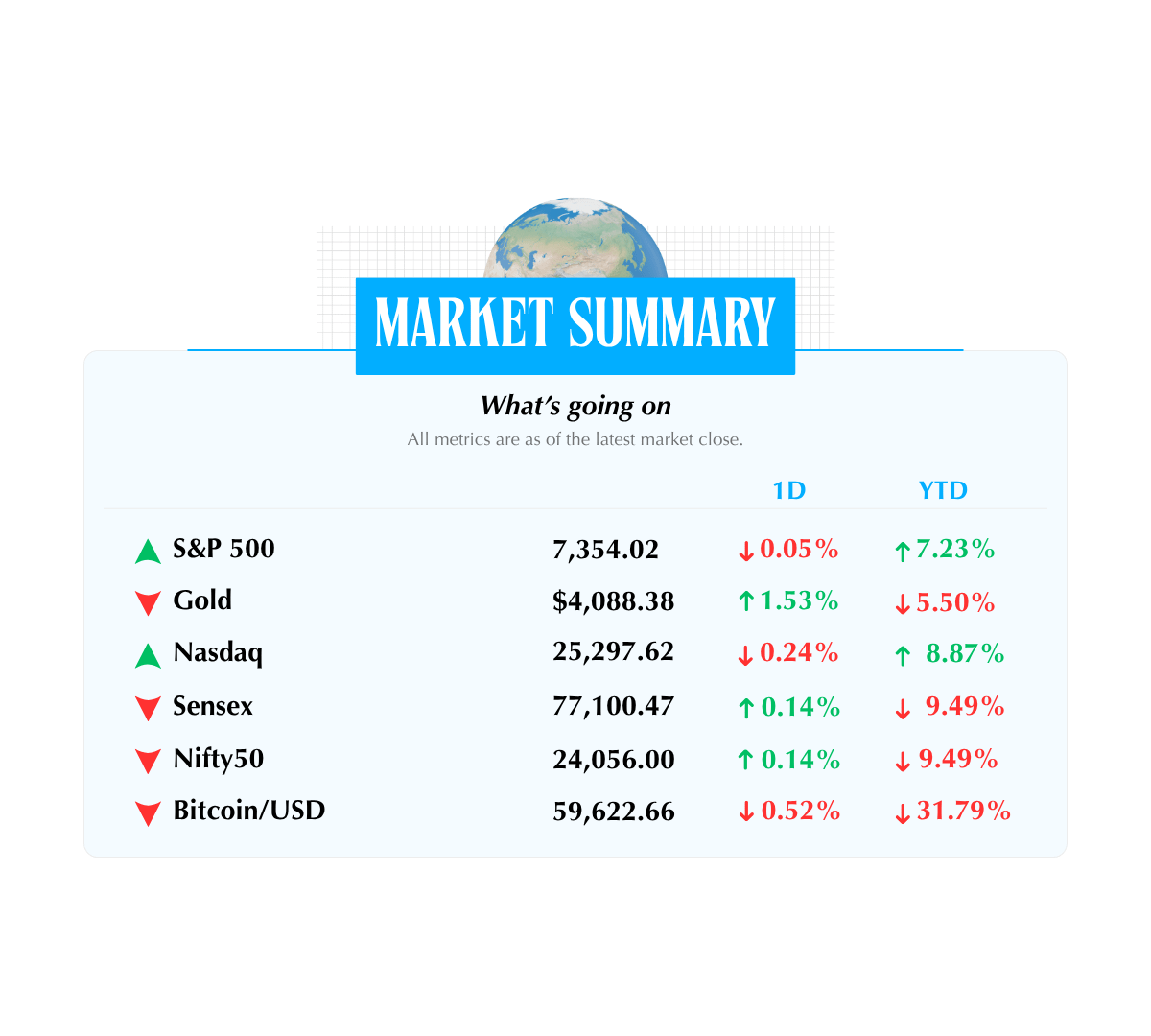
But before we get to the big stories, let’s take a look at how the markets are going to shape up this week.
All eyes will be on India’s IIP data, Manufacturing PMI and Services PMI, which will offer fresh clues on the economy ahead of the Q1 earnings season.
In geopolitics, the fragile peace between the US and Iran remains under pressure. Fresh US strikes on Iranian military targets and Iran’s retaliation have once again raised concerns over the Strait of Hormuz.
While the waterway remains open for now, Tehran has said only Iran will decide when normal shipping fully resumes.

💡 Spotlight: Inside India's latest Indian Ocean strategy 🌊
You may not have heard much about Seychelles, but this tiny island nation sits in the middle of the Indian Ocean, making it strategically important for India.
During PM Modi's visit, India signed agreements covering UPI, AI, cyber security, space and defence, announced a ₹1,250 crore Line of Credit, and extended humanitarian support including rice, cement, ambulances and patrol vessels.


Separately, the Indian Prime Minister also met Mauritius PM Navinchandra Ramgoolam to strengthen cooperation on maritime security, trade and development.


Let’s hit it! 💪🏻
1 Big thing: Persistent's biggest acquisition yet 💪🏻
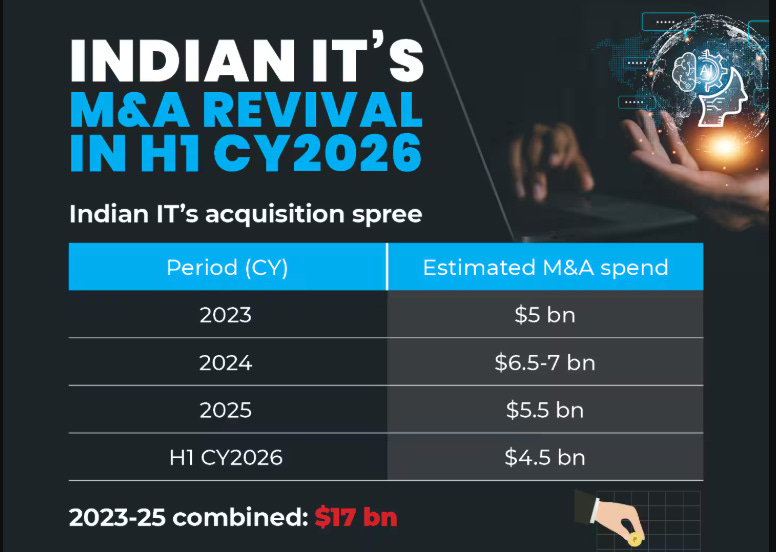
Indian IT company Persistent Systems has announced a takeover offer for German digital engineering firm Nagarro, in what could become one of the largest overseas acquisitions by an Indian IT services company.
Nagarro is a major player in digital engineering, enterprise software and customer experience, while Persistent brings expertise in AI, cloud and enterprise modernisation.
Why does this matter: if the acquisition goes through, Persistent and Nagarro will together become a $2.9 billion global AI-led technology powerhouse with over 46,000 employees across more than 40 countries.
More importantly, it gives Persistent exactly what it’s been looking for: a much stronger foothold in Europe. It will also support the company’s long-term ambition of reaching $5 billion in annual revenue by 2031.
The hurdles: Persistent first needs at least half of Nagarro’s shareholders to agree to sell their shares. It has already secured a deal to buy a 21% stake from Nagarro's biggest shareholder and is offering €81 per share to everyone else, more than double the current market price.
The acquisition won’t come cheap either. The company plans to borrow up to €1.4 billion (around $1.6 billion) from Barclays to help pay for the deal and clear Nagarro’s existing debt.
While Nagarro has been growing slower than Persistent and earns lower profits, analysts believe the acquisition could pay off in the long run.
2. Good show for Micron 💰
Micron shares are on a roll after the memory chipmaker reported blockbuster third-quarter earnings on the back of the AI boom.
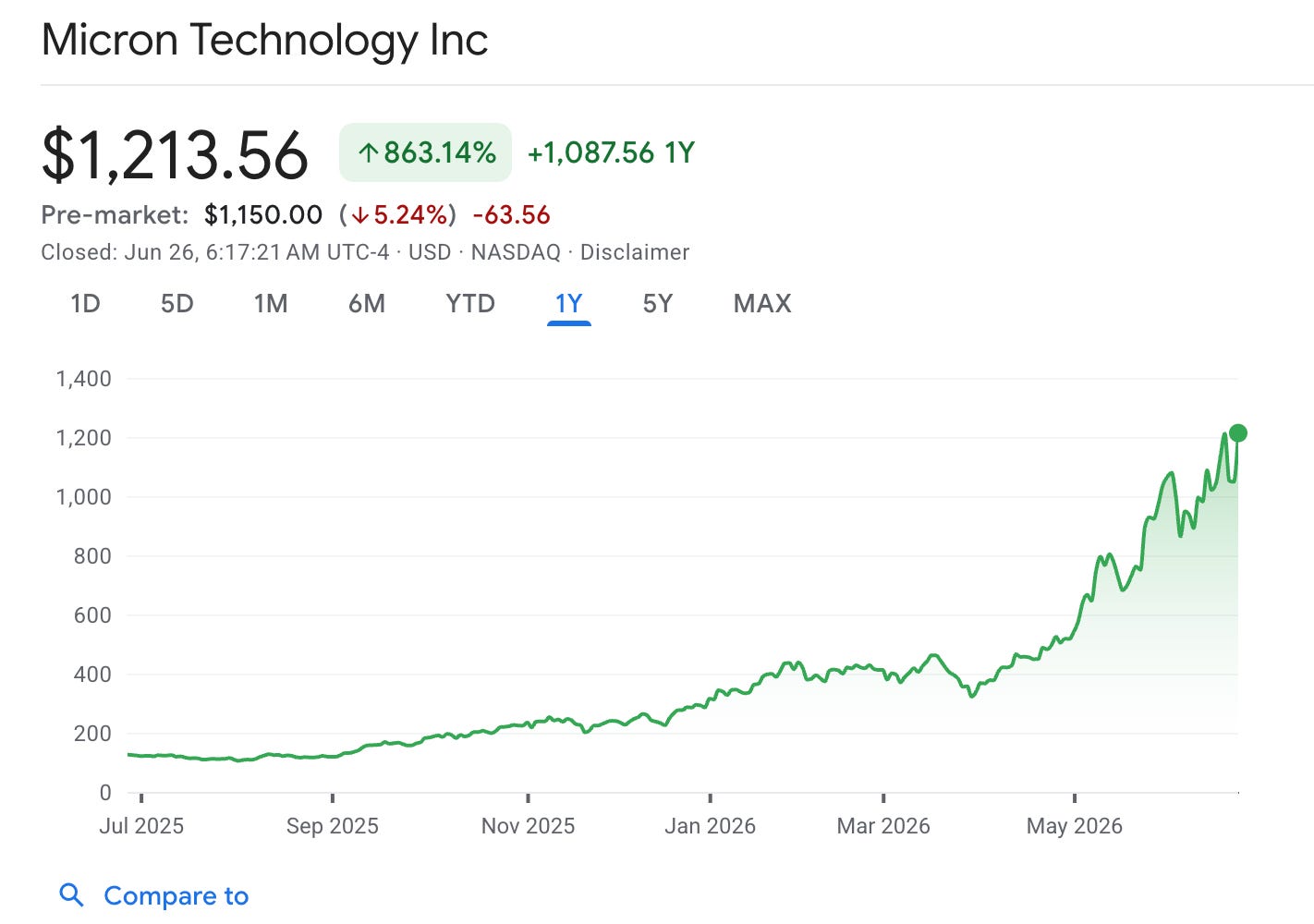
What’s happening: Micron’s revenue soared from $9.3 billion a year ago to $41.46 billion in the latest quarter, beating analyst expectations of nearly $36 billion, according to LSEG.
The company is now forecasting revenue of about $50 billion for the current quarter, up from $11.3 billion a year earlier.
What’s driving this: as companies build massive AI data centres, they need huge amounts of memory chips. That has tightened supply for smartphones, PCs and other electronic devices, pushing memory prices higher and boosting Micron’s earnings.
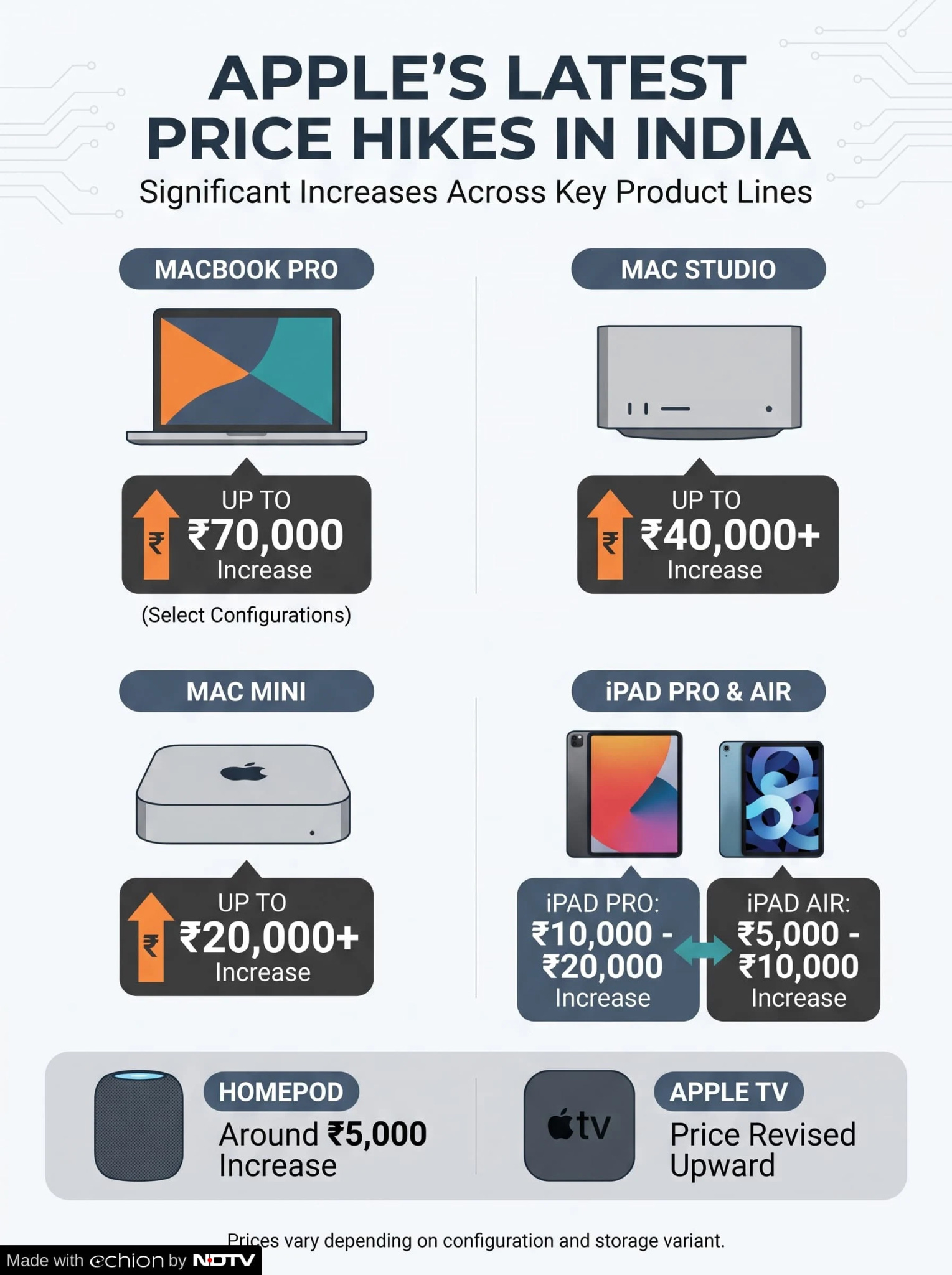
But there’s another side to this story. The same memory shortage that’s helping Micron is making life harder for companies like Apple.
Apple recently raised prices on several Macs and iPads, with some models becoming $100 to $300 more expensive. While the company didn’t directly blame memory costs, the global chip squeeze has made key components more expensive. iPhone prices, however, remain unchanged for now.
3. Amazon hot on India ♨️
Tech giant Amazon announced an additional $13 billion investment to expand its AI and cloud infrastructure in the country. That takes its total planned investment in India to a staggering $48 billion between 2026 and 2030.


What’s going on: back in December, Amazon had already committed $35 billion as global tech giants raced to build AI infrastructure in one of the world’s fastest-growing digital markets.
Today, hundreds of thousands of Indian businesses, startups and government agencies already use Amazon Web Services (AWS) to run everything from cloud computing to AI applications.
Customers include the National Health Authority, Government e-Marketplace, Apollo Tyres, Delhivery, Physics Wallah, Axis Bank and HDFC Bank, among many others.
The big picture: the country’s installed data centre capacity has jumped from around 375 MW in 2020 to nearly 1,500 MW in 2025, as demand for cloud services and AI computing continues to surge.
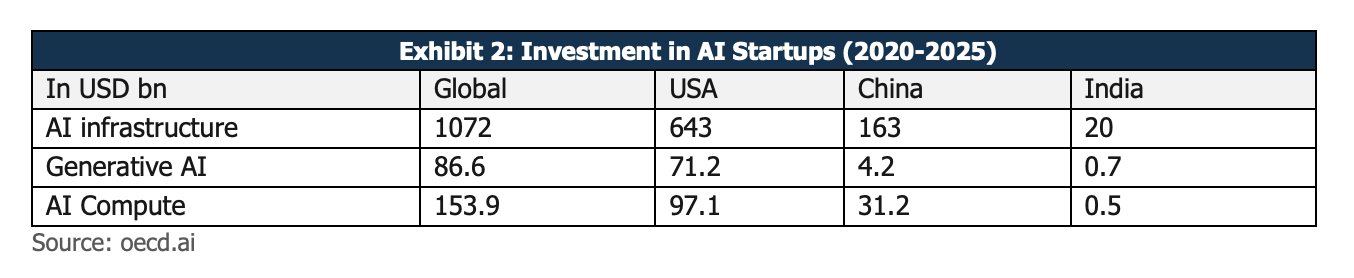
Globally, companies have invested nearly $1 trillion in AI infrastructure since 2020, and India is quickly emerging as one of the biggest beneficiaries.
4. One IPO just lit up the global AI chip race 🎊
Shares of South Korean chipmaker SK Hynix jumped nearly 13% on 25th June, after it announced plans to raise about $29.4 billion by listing its shares in the US, one of the biggest stock offerings ever.
Earlier this week, the company also overtook Samsung to become South Korea’s most valuable company, with a market value of $1.35 trillion.
If the US listing goes ahead at the proposed size, it would rank among the three largest stock market debuts in history, matching Saudi Aramco’s record-breaking $29.4 billion IPO in 2019.
What does the company actually do: SK Hynix makes the memory chips that power everything from your smartphone and laptop to AI tools like ChatGPT and the massive data centres behind them.

5. Why do Indians still prefer gold & real estate? 🤔
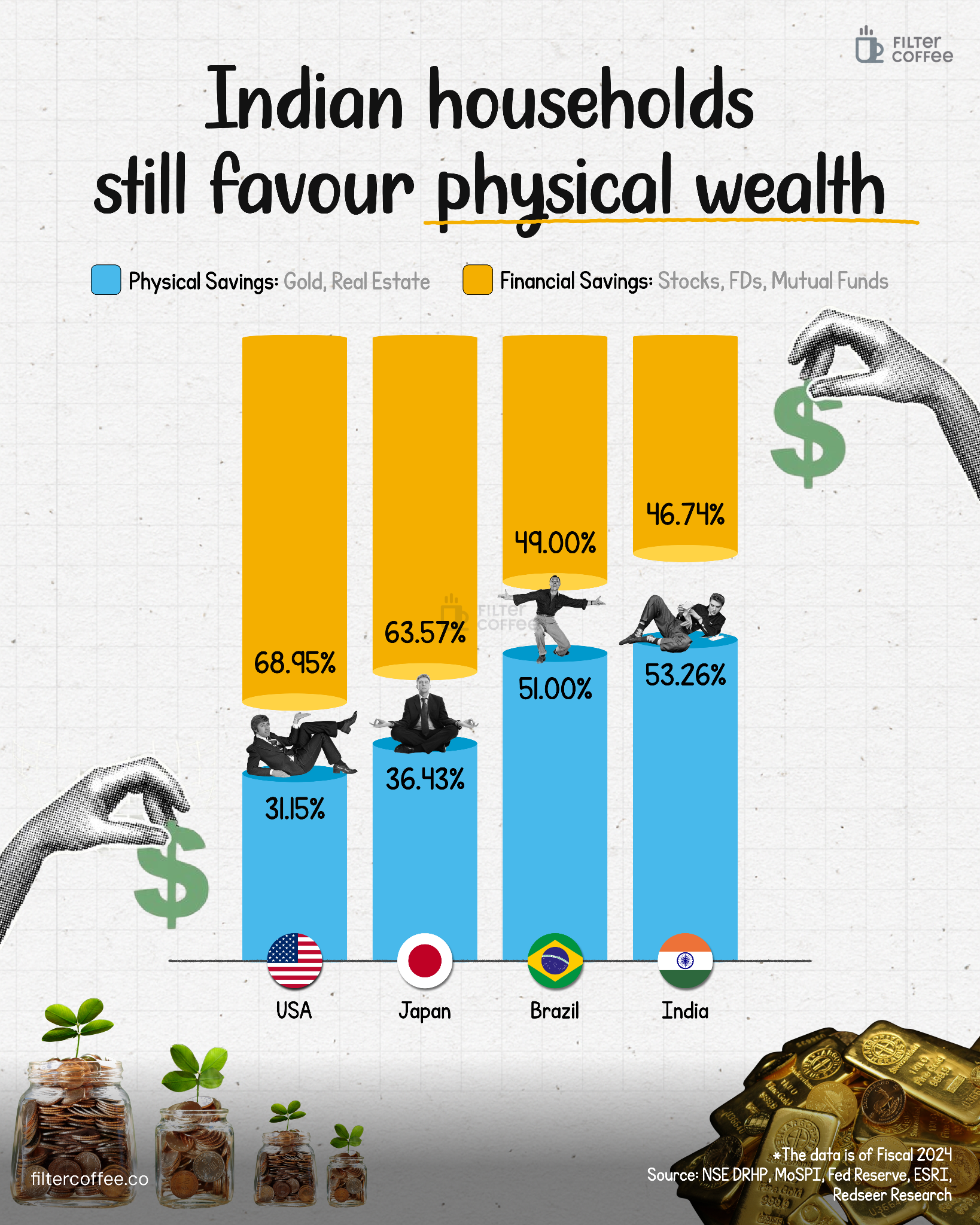
Indians are putting more money into financial assets than ever before, but gold and real estate still dominate household wealth.
Financial assets now make up 46.7% of household savings, up from 39.6% in 2012, while physical assets have fallen to 53.3%.
Yet deposits remain the favourite financial instrument, with stocks and mutual funds still accounting for a relatively small share.
6. Stocks that kept us interested 🚀
What went up ⬆️
🧪 Tata Chemicals gained more than 2% after fresh RBI norms sparked hopes of an eventual Tata Sons listing, lifting sentiment across Tata Group holding companies.
🛫 IndiGo, SpiceJet rallied up to 5% as crude oil prices fell below pre-war levels after a 42% decline.
📡 Sterlite Technologies surged 5% after launching its QIP and setting a floor price of ₹613.69.
🧪 Vijaya Diagnostic ended more than 4% higher as Emkay reiterated buy call and saw strong growth across key markets.
What went down ⬇️
📉 Rajesh Exports hit a fresh 5% lower circuit as ED alleged FEMA violations and record-keeping lapses.
⛏️ Metal stocks including Hindalco declined up to 3% after InCred Equities warned of stretched valuations in aluminium stocks, while a stronger dollar and weaker global commodity prices further weighed on sentiment.
What else are we snackin’ 🍿
🛵 Leadership shuffle: Instamart’s COO and CBO are stepping down amid intensifying quick commerce competition, as the company reshuffles leadership to strengthen its growth strategy.
📈 Fee hike: Passport fees will rise from July 1, with a 36-page passport costing ₹2,500 and Tatkal service increasing to ₹5,000.
🚀 D-street ready: Textile manufacturer Aastha Spintex will launch its ₹170 crore IPO on June 29, with a price band of ₹125-136 per share.
💸 Expansion plans: Ashoka Buildcon won a ₹304 crore highway project in Guyana to build a four-lane highway project, boosting its international order book.
That’s a wrap! Don’t let the Monday blues get to you.

And if you’d like to place your brand on this newsletter, let us know.
Hit that 💚 if you liked this issue.