

Dalal Street 🤝 Zepto
Banks get RBI boost, OpenAI's confidential IPO, and telecoms get relief.

🗓️ Morning, folks! ☀️
Dalal Street finally found its footing after two rough sessions.
Sensex and Nifty climbed around 0.5% each, with banking stocks leading the charge.

PSU banks stole the show, with every stock in the index ending in the green.
There was some good news for Reliance Industries too, which snapped a nine-day losing streak.
However, Nifty IT index extended its losing run to a fifth consecutive session as concerns around global tech spending continued to weigh on sentiment.
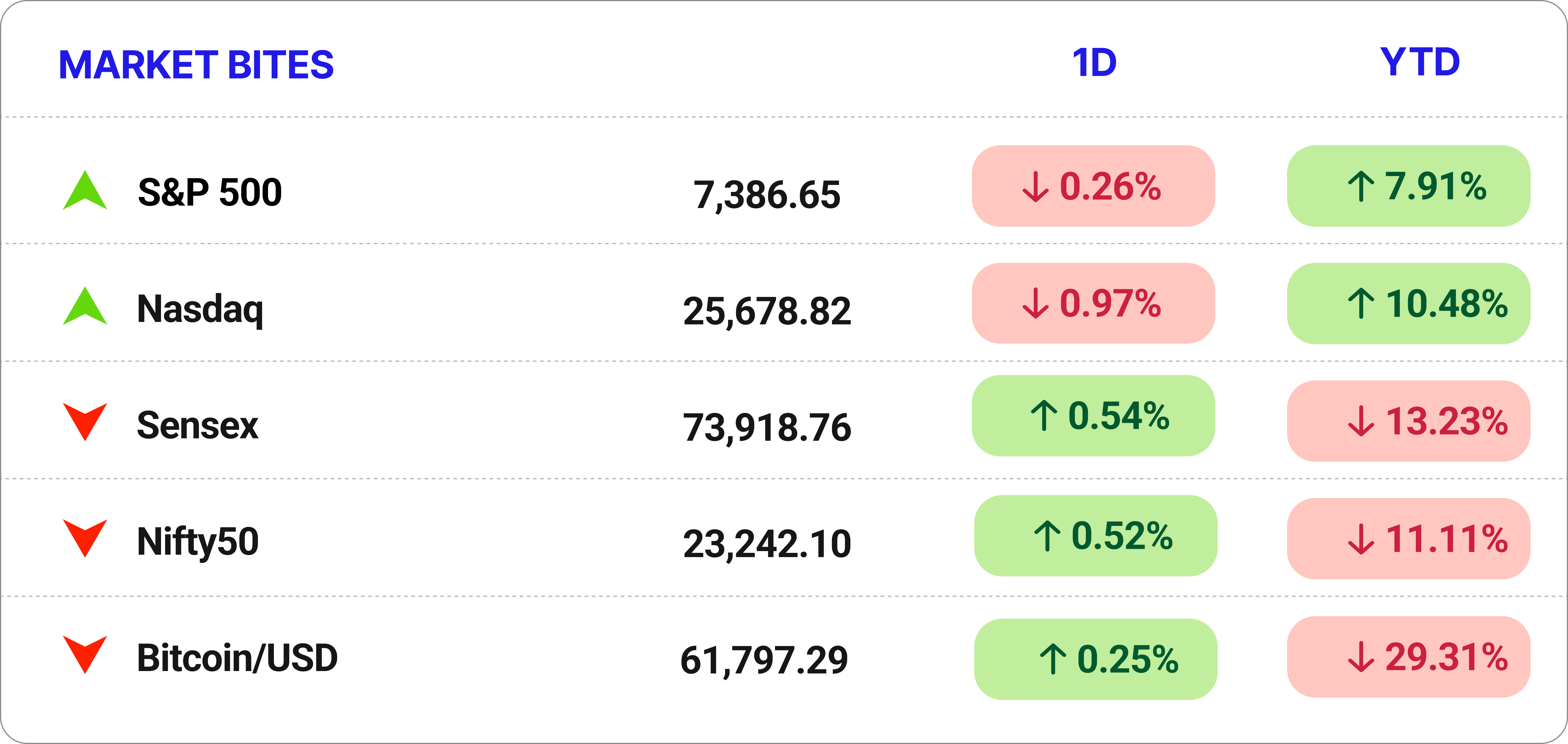
💡 Spotlight: banks catch an RBI tailwind 📉
Banks were in a good mood on Tuesday.
The reason: the RBI has made it easier for banks to raise money from overseas by expanding its ECB framework and introducing a special swap mechanism that lowers the cost of borrowing in foreign currencies.
In simple terms, banks can now access foreign funds more easily and at a lower cost.
Punjab & Sind Bank and Bank of Baroda led gains among PSU banks, while IDFC First Bank jumped around 4% after HSBC initiated coverage on the stock.
An interesting insight, India edges past South Korea again.
South Korea’s market capitalisation tumbled to $4.5 trillion after a sharp sell-off in AI-linked chip giants. On the other hand, India’s market value remained largely steady at $4.84 trillion, helping it reclaim the No. 6 spot globally.


Let’s hit it! 💪🏻
1 Big thing: Wake up, Zepto is heading to Dalal Street 💰
Quick commerce giant Zepto has filed updated IPO papers with SEBI and could hit the stock market as early as July at an estimated valuation of $10 billion.
Breaking it down: Zepto plans to raise ₹8,010 crore through a fresh issue of shares, while existing investors will sell part of their holdings, taking the total IPO size to around ₹11,000 crore.
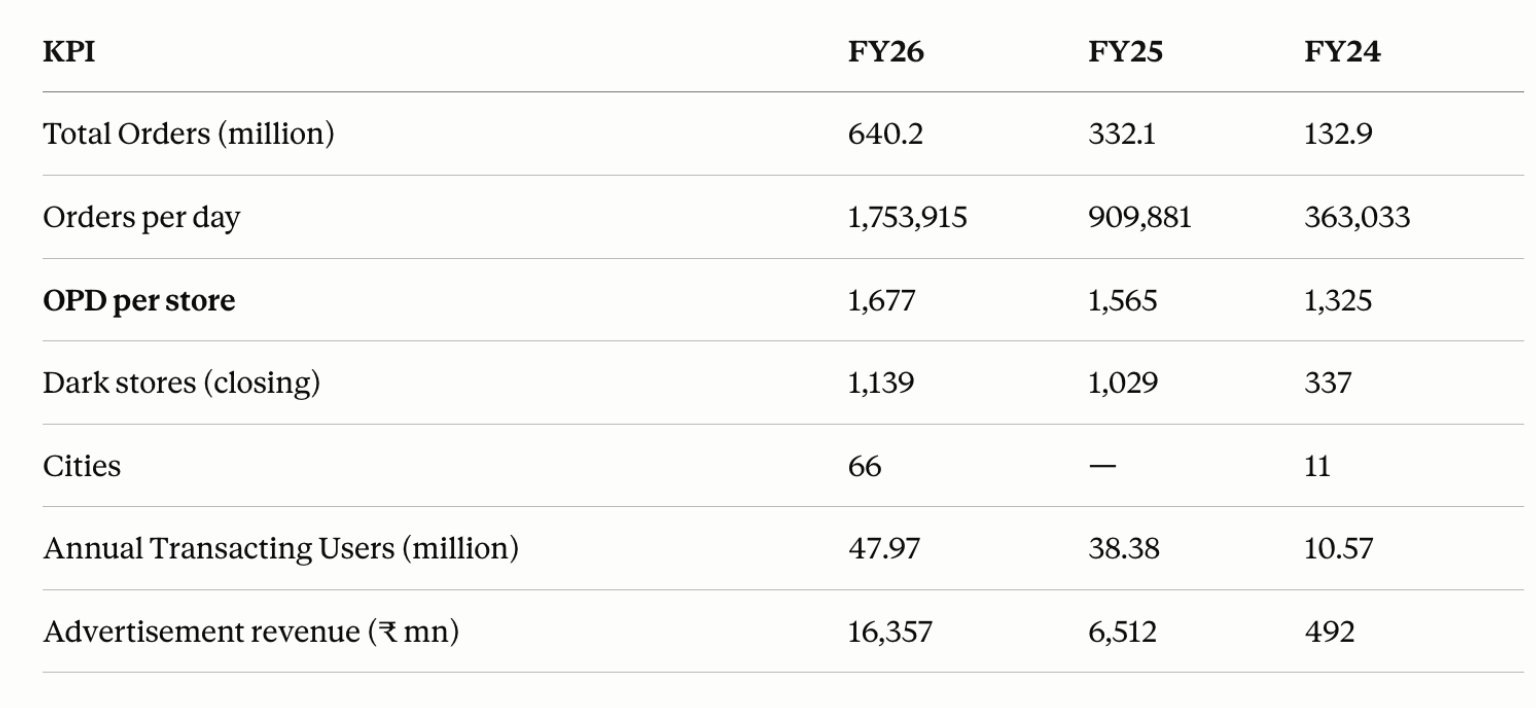
The numbers: revenues have surged, but the company reported a ₹5,905 crore loss in FY26, up from ₹4,700 crore a year earlier, as it continued spending heavily on expansion and customer acquisition.
The IPO filing also revealed that Zepto’s founders received summonses from the Enforcement Directorate (ED) in April.
The agency sought information related to foreign investments in the company, its shareholding structure, and other matters linked to India’s foreign exchange regulations.
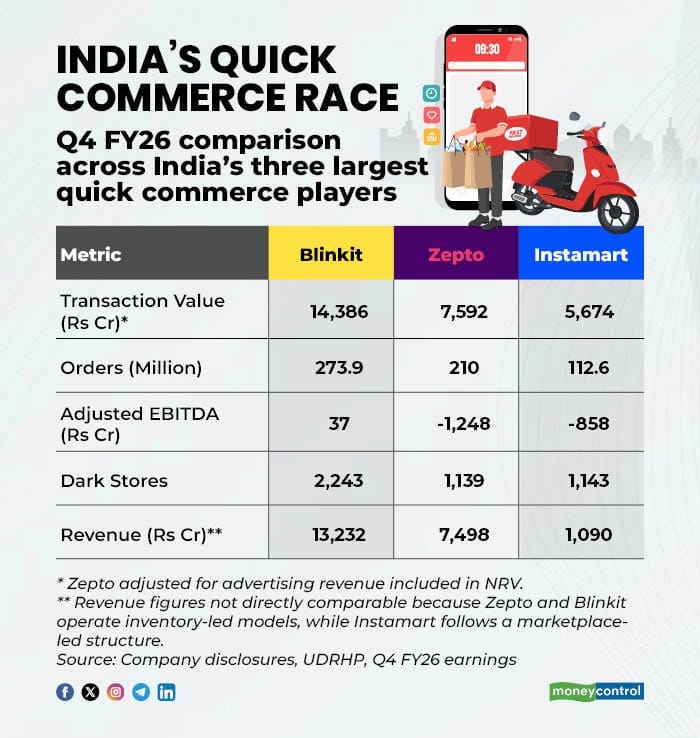
The bigger picture: Zepto is entering public markets as the quick-commerce battle intensifies. Blinkit is estimated to control over 40% of the market, while Zepto and Instamart each account for more than 20%.
More on IPOs 👀,
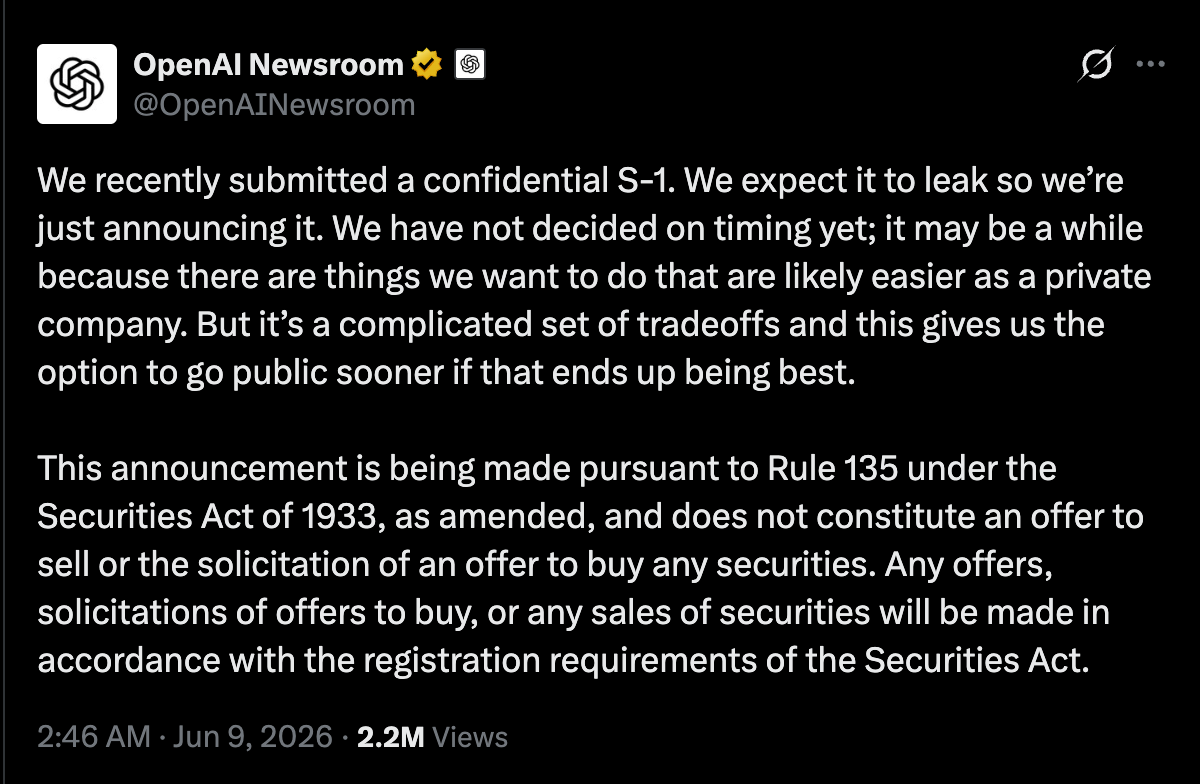
Just days after Anthropic confidentially filed to go public, OpenAI has reportedly done the same, setting the stage for what could become one of the biggest IPOs Wall Street has ever seen.
What’s going on: the ChatGPT maker, currently valued at more than $850 billion, is reportedly targeting a stock market debut as early as the fourth quarter of this year and could seek a valuation of around $1 trillion.
OpenAI now serves more than 900 million weekly active users, making it one of the fastest-growing technology platforms in history.
2. Can Adani become India’s smart meter king? ⚡
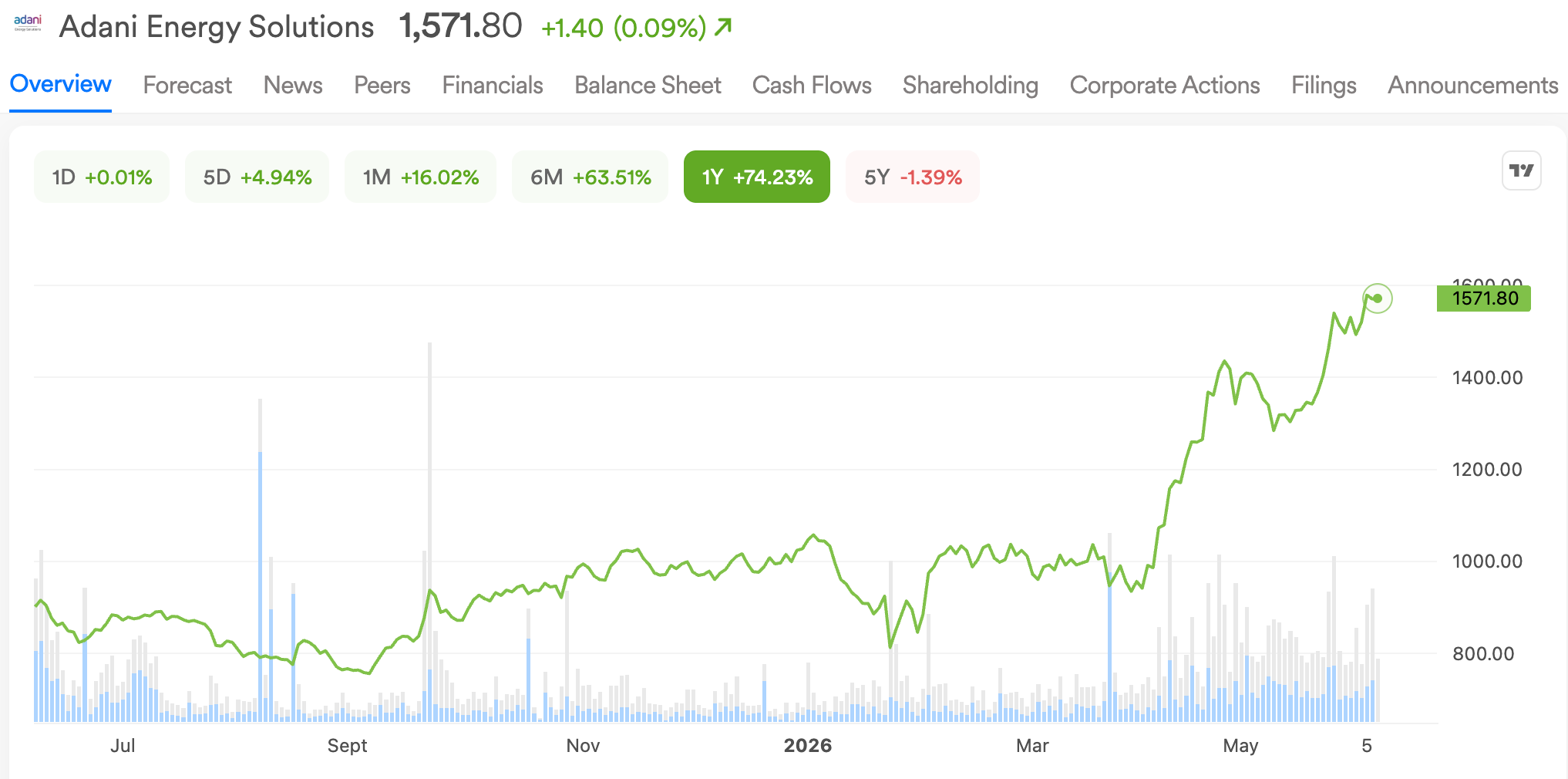
Adani Energy Solutions is acquiring smart metering company Intellismart Infrastructure for ₹3,050 crore to strengthen its position in the digital power infrastructure market.
The company helps electricity distributors replace traditional power meters with smart meters that can automatically track electricity usage, send readings digitally, reduce billing errors, and help utilities manage power supply more efficiently.
For consumers, this means fewer manual meter readings and more accurate billing. For power companies, it means better monitoring, lower losses, and improved collections.
Why Adani wants it: by buying Intellismart, AESL gets immediate access to a larger project pipeline, additional operational expertise, and a bigger presence in the Advanced Metering Infrastructure Service Provider (AMISP) segment.
While we are on acquisitions 💸,
British pharma giant GSK is acquiring US biotech company Nuvalent for $10.6 billion, making it one of the company’s biggest deals in more than a decade.
The deets: the deal is expected to close in 2026 and marks the first major acquisition under GSK’s new CEO Luke Miels.
Nuvalent develops targeted cancer drugs, particularly for lung cancer patients with specific genetic mutations.
3. Telecom scores a courtroom win 🧑⚖️
The Bombay High Court handed a major win to Bharti Airtel and Vodafone Idea.
It ruled that the Centre cannot go back and ask telecom companies to pay new spectrum charges years after they had already signed their licence agreements.
Spectrum charges are the fees telecom companies pay the government to use the invisible airwaves that carry mobile calls, texts and internet data.
The case: in 1999, the government changed how telecom companies paid for their licences under the National Telecom Policy (NTP), 1999.
Instead of paying a fixed fee, companies began paying the government a share of their revenue. They also paid more whenever they received extra spectrum (the airwaves used to provide mobile and internet services).
But in 2012, the Centre introduced a new One-Time Spectrum Charge (OTSC) on companies using more than 6.2 MHz of spectrum and made it applicable from 2008, meaning companies were asked to pay extra for spectrum they had already been using for years.
What the verdict means: Bharti Airtel and Vodafone Idea argued that this was unfair because the original licence agreements and the Indian Telegraph Act, 1885 did not allow the government to change the payment rules later.
4. India slipped to 157th in press freedom rankings. What happened?

A free press is often called the fourth pillar of democracy. But how is India doing on that front?
According to the World Press Freedom Index 2026, India ranked 157th out of 180 countries, slipping six places from last year.
What’s interesting is that India was ranked 140th a decade ago.
Since then, its position has generally moved lower, sparking debates around media freedom, journalism and accountability.
5. Carcinogens in tea bags? India wants them out

India has introduced its first-ever quality standards for tea bags and banned the use of epichlorohydrin, a chemical classified as a potential carcinogen, along with chlorine bleaching in tea bag materials.
The new BIS standards go beyond the tea itself and regulate everything from the paper, thread and tags to the inks, adhesives and packaging materials used in tea bags.
The move comes at a time when India’s tea bag market is worth around $500 million and is growing rapidly.
As global markets demand higher standards for food-contact materials, India is aligning its tea bag industry with international expectations.
6. Stocks that kept us interested 🚀
What went up ⬆️
💪🏻 Shares of Redington rose 4.5% after Apple Inc used its Worldwide Developers Conference to lay the foundation for a new generation of products.
📈 Panacea Biotec jumped nearly 10%, as investors cheered progress in trials of its dengue vaccine candidate, DengiAll.
🪖 Shares of Studds Accessories surged 18% after a report highlighted a sharp rise in helmet demand in West Bengal following stricter enforcement of traffic safety rules after the recent Assembly elections.
☝🏻 JSW Infrastructure shares gained over 5% after the company won the bid to develop container berths at Kolkata Dock System.
🏍️ Ola Electric shares ended 6% higher after strong buying interest and a recent ₹780 crore fundraise.
🧐 Defence stocks rallied, led by gains in Paras Defence, Zen Technologies and Data Patterns gaining on investor optimism around long-term growth prospects and strong order inflows.
What went down ⬇️
📉 Shares of Bluestone Jewellery and Lifestyle declined nearly 4% after a block deal worth around ₹300 crore was launched through the sale of up to 58 lakh shares.
🔻 NLC India shares fell over 2% after the government announced plans to sell up to a 3% stake in the Navratna PSU through an offer for sale (OFS) worth ₹1,263 crore.
What else are we snackin’ 🍿
🏗️ Flyover order: KNR Constructions received a ₹235 crore flyover project in Hyderabad from Malkajgiri Municipal Corporation.
⚖️ Visa fee: A US court struck down Trump’s $100,000 H-1B visa fee, ruling that Congress never authorised the charge.
🏍️ Board exit: Rajiv Bajaj will step down from Bajaj Finserv’s board and will not seek re-election at the July AGM, choosing to focus on Bajaj Auto’s business operations.
☀️ Green energy: Rajnath Singh approved a 250 MW solar-plus-battery storage project on defence land in Uttar Pradesh, with NTPC set to execute the ministry’s first large-scale renewable energy initiative.
🤖 AI hub: HCLTech launched an AI Innovation Zone with Google Cloud in Santa Clara to help enterprises scale agentic, kinetic and physical AI applications.
That’s a wrap! Don’t let the midweek blues get to you.

And if you’d like to place your brand on this newsletter, let us know.
Hit that 💚 if you liked this issue.