

Dalal Street in meltdown mode 📉
Cinema stock revives, life insurance on a roll, and WFH plot twist.

🗓️ Morning, folks! ☀️
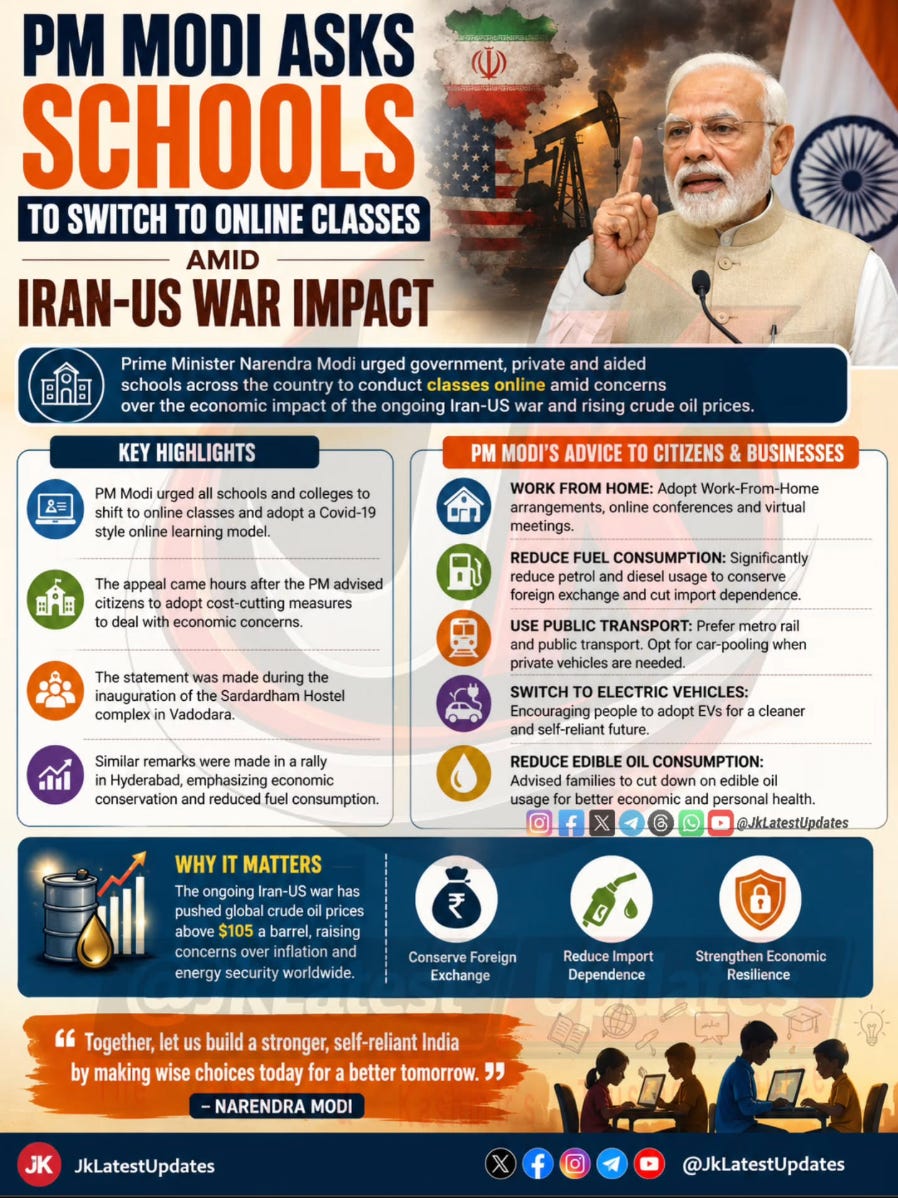
A second appeal came within just two days from Prime Minister Narendra Modi, urging citizens to cut petrol and diesel usage by using public transport, carpooling, and electric mobility wherever possible.
He also encouraged companies to prioritise virtual meetings and work-from-home setups to reduce unnecessary travel. Extending the appeal further, PM asked schools, colleges, and coaching centres to temporarily shift online, similar to Covid-era arrangements.
Meanwhile, Markets had a proper meltdown on Monday.
Sensex and Nifty crashed up to 2%, as rising geopolitical tensions, surging crude oil prices, and a collapsing rupee triggered a broad risk-off mood across Dalal Street.
The rupee weakened sharply to a fresh record low of 95.34/$, making investors even more nervous.
The biggest trigger came after hopes of a US-Iran peace breakthrough faded, sending Brent crude back above $105/barrel.
There was more fuel to the panic.
PM Modi’s call for restrained spending on fuel and gold amid the Middle East crisis also added to concerns around consumption demand.

💡 Spotlight: How markets reacted to PM Modi’s Sunday speech 🇮🇳
Travel stocks hit turbulence: IndiGo tumbled nearly 5% after PM Modi urged Indians to avoid foreign travel. Yatra, IRCTC, and other travel & hospitality stocks also slipped up to 3%.
Fertiliser stocks lose steam: FACT, RCF, and other fertiliser players fell up to 4% after the PM called for lower chemical fertiliser usage and more sustainable farming practices.
Edible oil players under pressure: Patanjali Foods and AWL Agri declined up to 2% after the Prime Minister urged households to reduce edible oil consumption.
EV stocks get a boost: Ather Energy, JBM Auto, and other electric vehicle stocks rallied up to 6% as PM Modi pushed for faster EV adoption.
WFH worries hit Bengaluru realty: Prestige Estates, Brigade Enterprises, and Puravankara slipped up to 3% after PM Modi encouraged work-from-home practices.
Let’s hit it! 💪🏻
1 Big thing: PVR Inox returns to profit 💸
PVR Inox delivered a good Q4, returning to profit as audiences flocked back to theatres.
However, the stock fell nearly 4.5% post the results.
By the numbers:
Net profit: at ₹186.7 cr vs loss of ₹125 cr (YoY)
Revenue: up 25.8% YoY at ₹1,547.3 cr vs ₹1,230 cr
EBITDA: up 56% YoY at ₹452 cr vs ₹289.4 cr
Margin: at 29.2% vs 23.5% (YoY)
The big driver? Bollywood’s comeback.
Unlike last year’s weak Hindi film slate, this quarter was powered by strong releases led by Ranveer Singh’s Dhurandhar.

Films like Dhurandhar-The Revenge, Border 2, and Project Hail Mary helped PVR Inox clock its highest-ever fourth-quarter box office collections.
The management said FY26 was the strongest year ever for the Indian film industry, with total box office collections rising 11% to ₹13,519 crore.
Another positive sign: growth is becoming broader. Mid-budget films earning ₹100-200 crore increased their share of collections from 12% to 20%, reducing the industry’s dependence on just a handful of mega-blockbusters.
2. Toyota doubles down on India 🚗
Japanese auto giant Toyota is planning to build a brand-new manufacturing plant in Maharashtra as it gears up for India’s booming SUV demand.
The company could invest nearly ₹20,000 crore into this greenfield project.
The deets: the new factory will come up in the Bidkin Industrial Area near Aurangabad and is expected to start operations in 2029. The plant will be capable of producing 1 lakh vehicles annually.
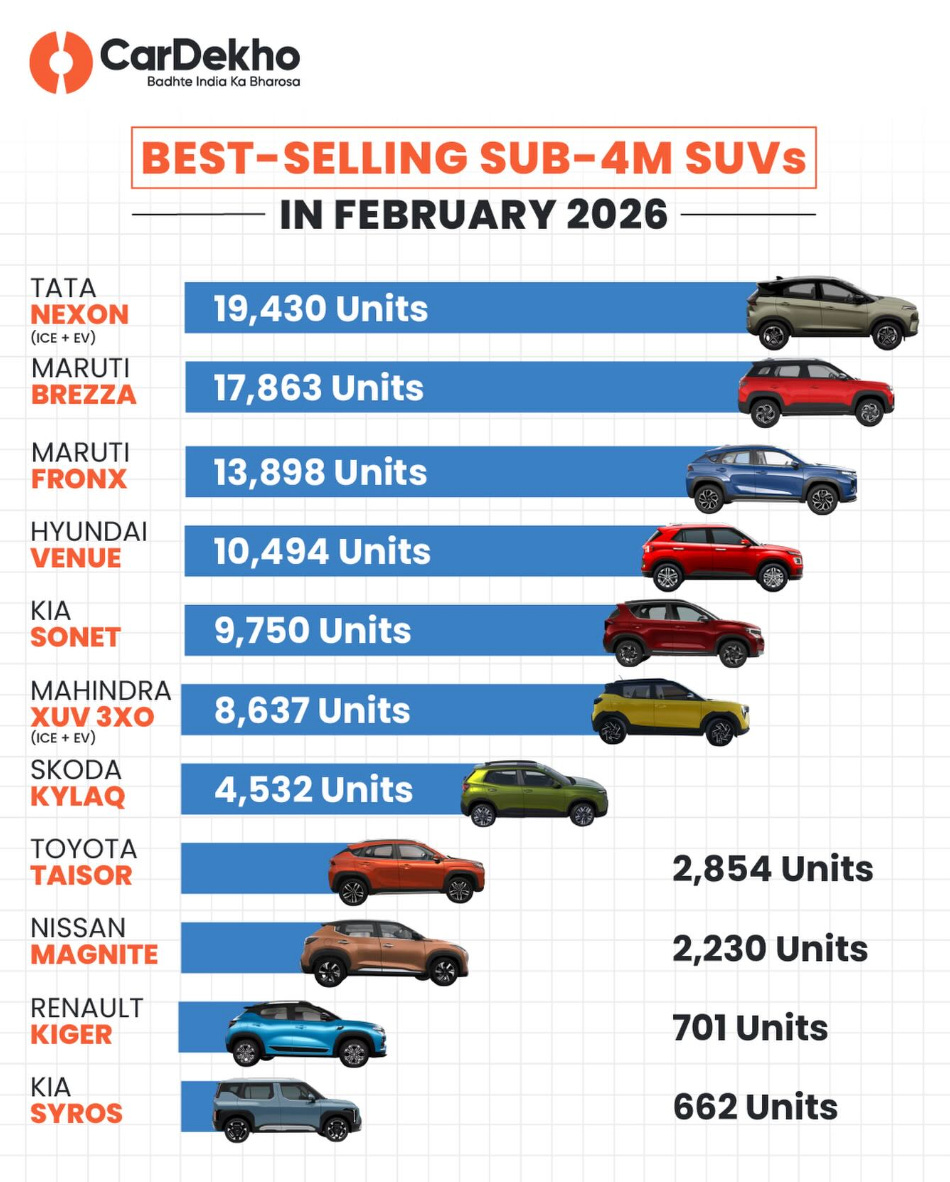
Big theme: sub-4 metre SUVs are dominating Indian roads, with Tata Nexon leading February sales at 19,430 units, followed by Maruti Brezza at 17,863 units.
Last month, Mahindra & Mahindra reported a sharp rise in electric SUV sales and overall vehicle dispatches.
SUVs are becoming India’s new family cars. Buyers are increasingly shifting from small hatchbacks to bigger, feature-packed SUVs, pushing automakers into an aggressive expansion race.
3. India’s insurance rally 💰
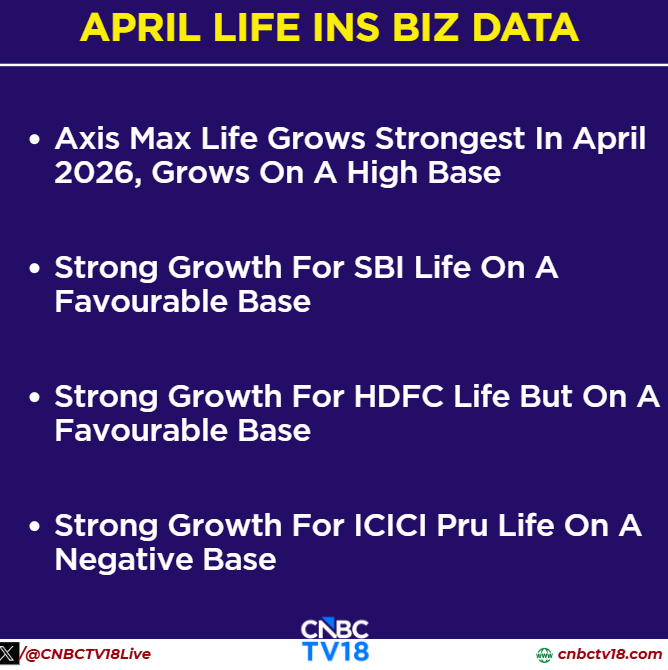
India’s life insurers are off to a flying start with new premium collections jumping over 40% in April despite last year’s already high base.
Premium collection simply means the total money insurance companies collect from customers who buy or renew insurance policies.
Who are winning: SBI Life emerged as the biggest standout in April. Its new business premiums surged 80%, while retail policy sales more than doubled.
ICICI Prudential also posted strong numbers, with premium growth of 26% and annual premium collections rising 38%. HDFC Life followed with nearly 30% growth in new premiums.
Meanwhile, LIC maintained steady momentum at scale, reporting a 38% rise in premiums.
The backdrop: India’s life insurance boom is increasingly looking structural rather than just a post-pandemic rebound.
In FY26, new business premiums rose nearly 16% to ₹4.59 lakh crore, while over 2.8 crore policies were sold during the year.
4. Why is ethanol driving India’s alcohol boom? 🤯

India’s alcohol boom is no longer just about whisky and beer.
As India races toward 20% ethanol blending, sugar mills, ethanol plants, glass makers and logistics companies are suddenly sitting at the centre of a massive industrial shift.
Premium alcohol sales in India grew nearly 12% by value in 2025 even as global markets slowed, but the most surprising winners are companies most people have never even heard of.
5. Why global beauty brands can’t afford to ignore India anymore? 🤝

India’s beauty and personal care market is expected to reach $40 billion by 2030, making it the world’s fourth-largest beauty market.
And global beauty giants are moving fast to capture that opportunity.
Rihanna recently launched Fenty Beauty in India through Reliance’s Tira and Sephora India, while Estée Lauder, Unilever and L’Oréal are all expanding aggressively in the country.
The reason is simple: India’s beauty spending is still relatively low, but rising quickly.
Younger consumers are moving from occasional purchases to daily skincare, makeup, fragrance and haircare routines, turning India into one of the world’s fastest-growing beauty markets.
6. Stocks that kept us interested 🚀
What went up ⬆️
⬆️ Bank of Baroda gained after it reported a good Q4 with a 11.2% rise in its standalone Q4 net profit at ₹5,615.6 crore compared to last year.
💰 Bank of India shares jumped 2% after the lender reported a strong Q4, with net profit rising 82.5% YoY to ₹2,626 crore and asset quality improving.
💪🏻 Tata Consumer Products shares hit 8% after the company reported strong March quarter earnings and brokerages backed its growth outlook.
⚡️ Shares of Vodafone Idea rallied 8.3% after reports suggested that parent company Vodafone PLC may transfer part of its stake to the telecom operator.
💸 Multi Commodity Exchange of India (MCX) shares were up nearly 3% after the company reported a 4x jump in Q4 net profit and a 3x rise in revenue.
What went down ⬇️
🔻 Swiggy shares fell up to 6% as Instamart’s slowdown weighed on Q4 results, while rival Eternal slipped 4%. The fall also comes on the back of rising crude oil prices.
❌ Urban Company shares fell 9.7% after the company reported a wider net loss in its Q4 results.
What else are we snackin’ 🍿
✈️ Supply deal: Brazilian aerospace giant Embraer named Bharat Forge as a supplier for forged raw materials under its supply chain diversification strategy.
📉 SIP dip: SIP inflows slipped 3% to ₹31,115 crore in April after March’s surge, while the stoppage ratio eased to 97.6%.
💸 Big deal: Afcons Infrastructure won a ₹7,544 crore railway project in Croatia, marking the company’s entry into Europe with its biggest overseas order.
🏧 Banking mandate: CMS Info Systems won a 5-year ATM managed services contract from HDFC Bank, covering cash logistics and AI-powered monitoring solutions.
💊 Canada approval: Biocon Pharma received Health Canada approval for its micafungin injection used to treat and prevent serious fungal infections.
🚀 Missile boost: India successfully tested the MIRV-capable Agni-5 missile, strengthening its long-range strategic strike capabilities with multiple warhead targeting.
That’s a wrap! Don’t let the weekday blues get to you.

And if you’d like to place your brand on this newsletter, let us know.
Hit that 💚 if you liked this issue.
they should make electric or dolar powered vehicles