

AI’s newest address: Jamnagar 🤖
Relief for agri, more internet deals, and new defence flex.

🗓️ Morning, folks! ☀️
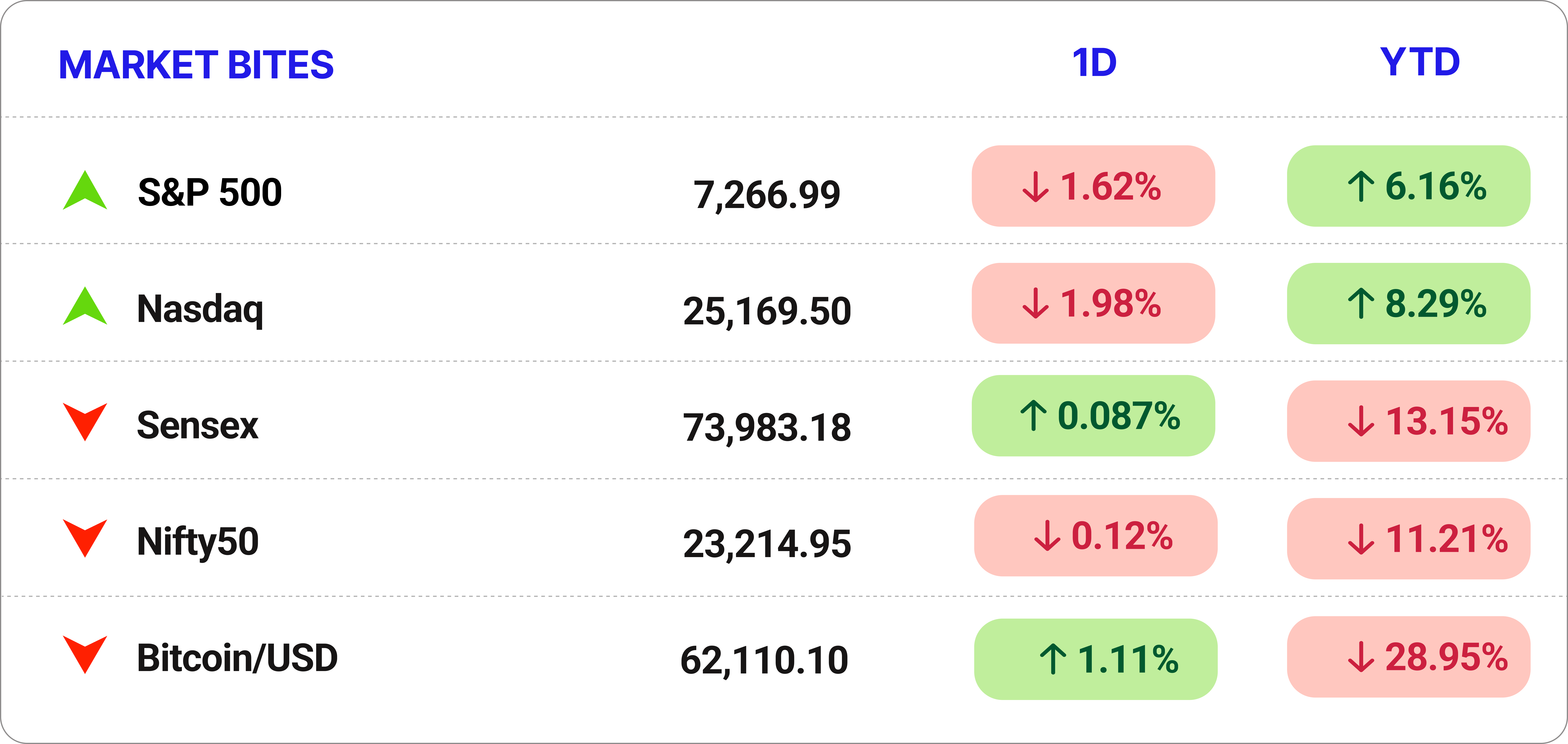
Sensex and Nifty erased most of their intraday gains to end largely unchanged on Wednesday.

FMCG and private banking stocks offered some support, with Nestlé India, Axis Bank and Kotak Mahindra Bank leading the gains.
However, Coal India, Hindalco and Infosys, weighed on the benchmarks.
Sectors like media, metals, energy, oil & gas, and PSU banks declined up to 2%, suggesting investors are becoming a bit more selective after the recent rally.
Meanwhile, things don’t look too great globally either.
U.S. Central Command (CENTCOM) said it launched a fresh round of strikes on multiple targets in Iran on Wednesday, following orders from President Donald Trump.
CENTCOM said the strikes were a response to Iran’s “continued aggression” and later confirmed that the operation had been completed.
The escalation came after Iran claimed it had targeted U.S. military assets in the region, including the Fifth Fleet headquarters in Bahrain.
Meanwhile, tensions are rising around the Strait of Hormuz. Iran said it was closing the key shipping route and warned vessels against entering, but CENTCOM said commercial ships were still transiting through the strait.

💡 Spotlight: fertiliser subsidy buzz lifts stocks 🌾
Shares of FACT and Chambal Fertilisers jumped up to 5% after reports suggested the Fertiliser Ministry has asked for a sharp increase in the subsidy budget for FY27.
Global fertiliser prices are rising again due to the ongoing US-Iran conflict.
If disruptions around the Strait of Hormuz continue, India’s fertiliser import bill could surge, forcing the government to spend more to keep fertiliser prices affordable for farmers.
While domestic production is improving, investors are betting that higher subsidies could aid fertiliser companies if global supply pressures persist.
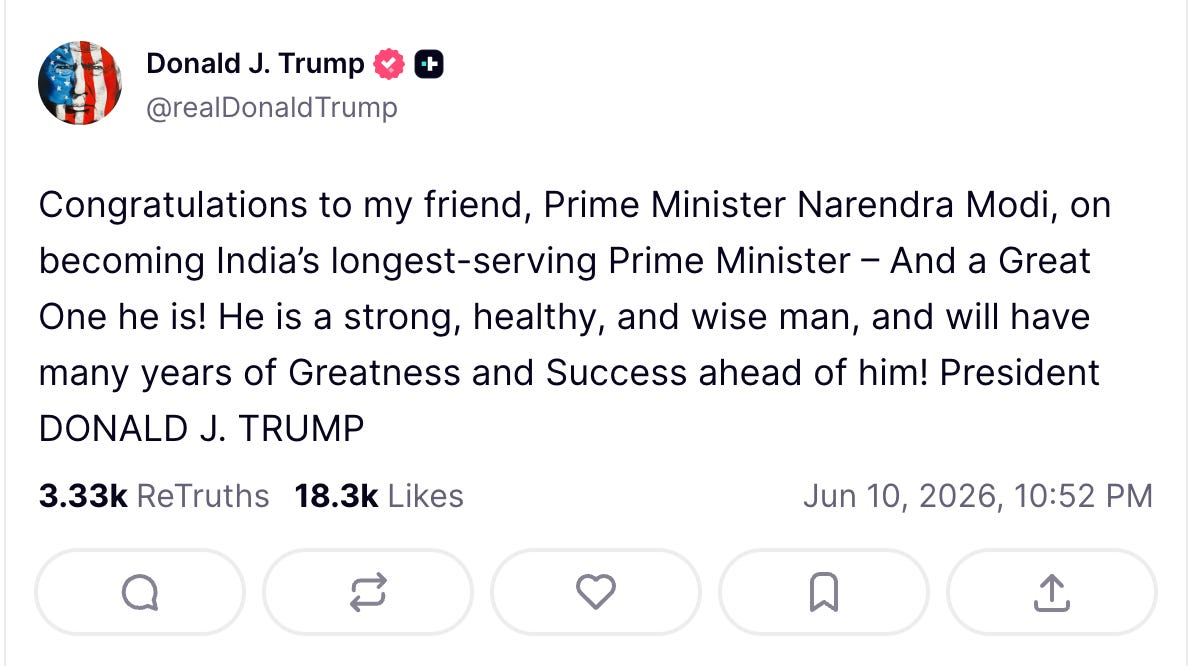
In a national update, world leaders including Donald Trump and Benjamin Netanyahu congratulated Prime Minister Narendra Modi on becoming India’s longest-serving PM.

Let’s hit it! 💪🏻
1 Big thing: Meta-Reliance AI party 🎉
Everyone wants a bigger piece of the AI pie. And now, Gujarat’s Jamnagar could soon become home to a major AI-powered data centre.
What’s poppin’: Reliance and Meta have teamed up to build Meta’s first AI-enabled data centre in India, as the company races to expand its computing infrastructure amid the global AI boom.
Reliance will build a 168-megawatt data centre in Jamnagar, which Meta will lease once it’s ready.
The project is expected to be completed within two years. The partnership is backed by an initial investment of ₹855 crore, with Reliance contributing 70% and Meta funding the remaining 30%.
So, why India: simply put, India is one of Meta’s most important markets. Facebook, Instagram and WhatsApp together have more than 1 billion monthly users in the country. And Meta isn’t alone.
OpenAI CEO Sam Altman had revealed that India is OpenAI’s second-largest market, with more than 100 million users.
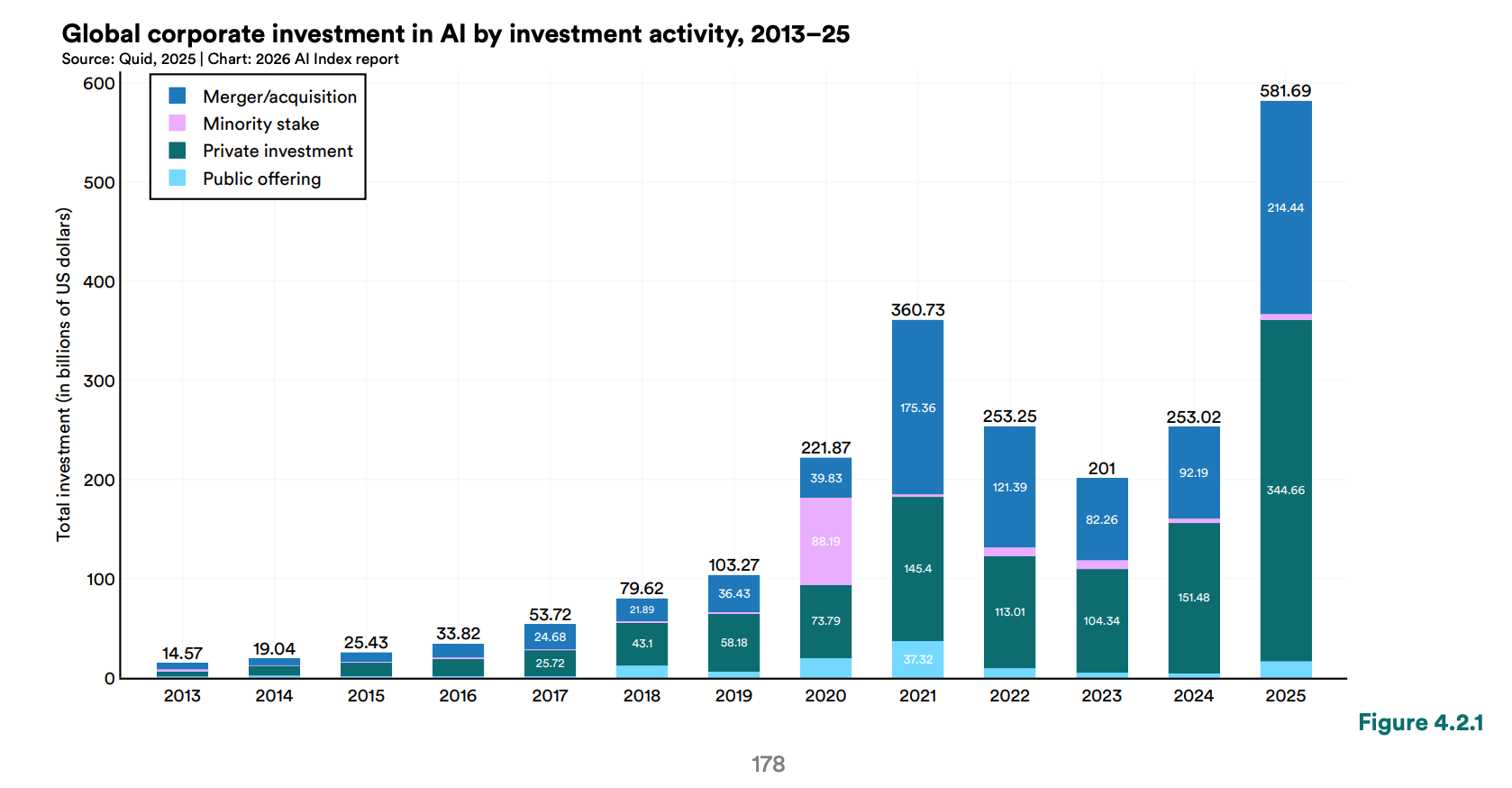
The global AI investment boom is also accelerating.
Corporate AI investments more than doubled from $253 billion in 2024 to nearly $582 billion in 2025, driven by a surge in private funding, acquisitions & infrastructure spending.
And let’s not forget one of the most viral moments from India’s five-day AI Summit earlier this year.
OpenAI CEO Sam Altman and Anthropic CEO Dario Amodei seemingly refused to hold hands during a group photo, creating an awkward crossover that took over social media.
That’s not all 🧐,
CleanMax Enviro Energy Solutions rallied 9% after announcing a partnership with Meta Platforms to develop more than 900 MW of renewable energy capacity in India.
What’s brewing: Meta has contracted nearly 1 GW of new renewable energy capacity in India through agreements with clean energy providers.
Meta is also partnering with Fourth Partner Energy for another 88 MW of new solar and wind projects across Tamil Nadu, Karnataka, Maharashtra and Uttar Pradesh.
Why does this matter: AI, data centres and cloud services consume huge amounts of electricity. As Meta expands its AI and digital infrastructure, it also needs more clean energy to power that growth.
2. Dixon’s latest Taiwan bet 🇹🇼
Looks like Taiwan is the next leg of Dixon’s growth story.
The company has formed a joint venture with Taiwan’s Gemtek Technology, just days after striking another deal with a Taiwanese hardware giant.
What’s happening: the joint venture will manufacture optical transceivers, BOSA modules and other telecom products in India.
Think of them as the hardware that carries internet and mobile data from one place to another at high speed.
What will they do: apart from the internet, through this joint venture, Dixon will also manufacture broadband infrastructure, and data centres.
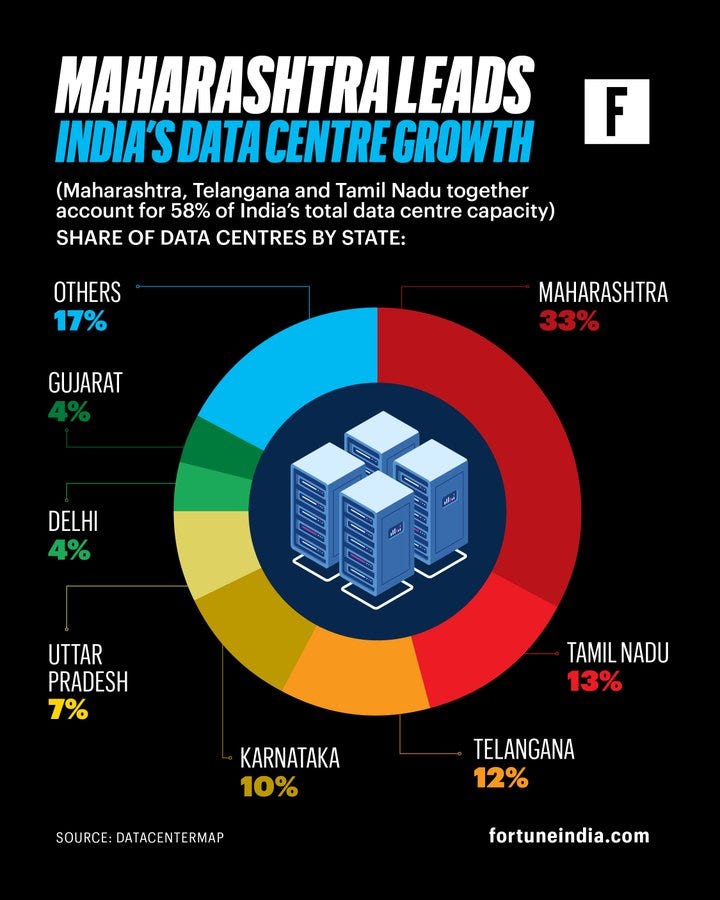
Big theme: every ChatGPT query, Netflix stream, UPI transaction, Instagram reel and cloud application needs processing, and the resulting data must be stored in data centres. India’s data centre capacity is also expected to more than double by 2030.
While we are on deals, 💸
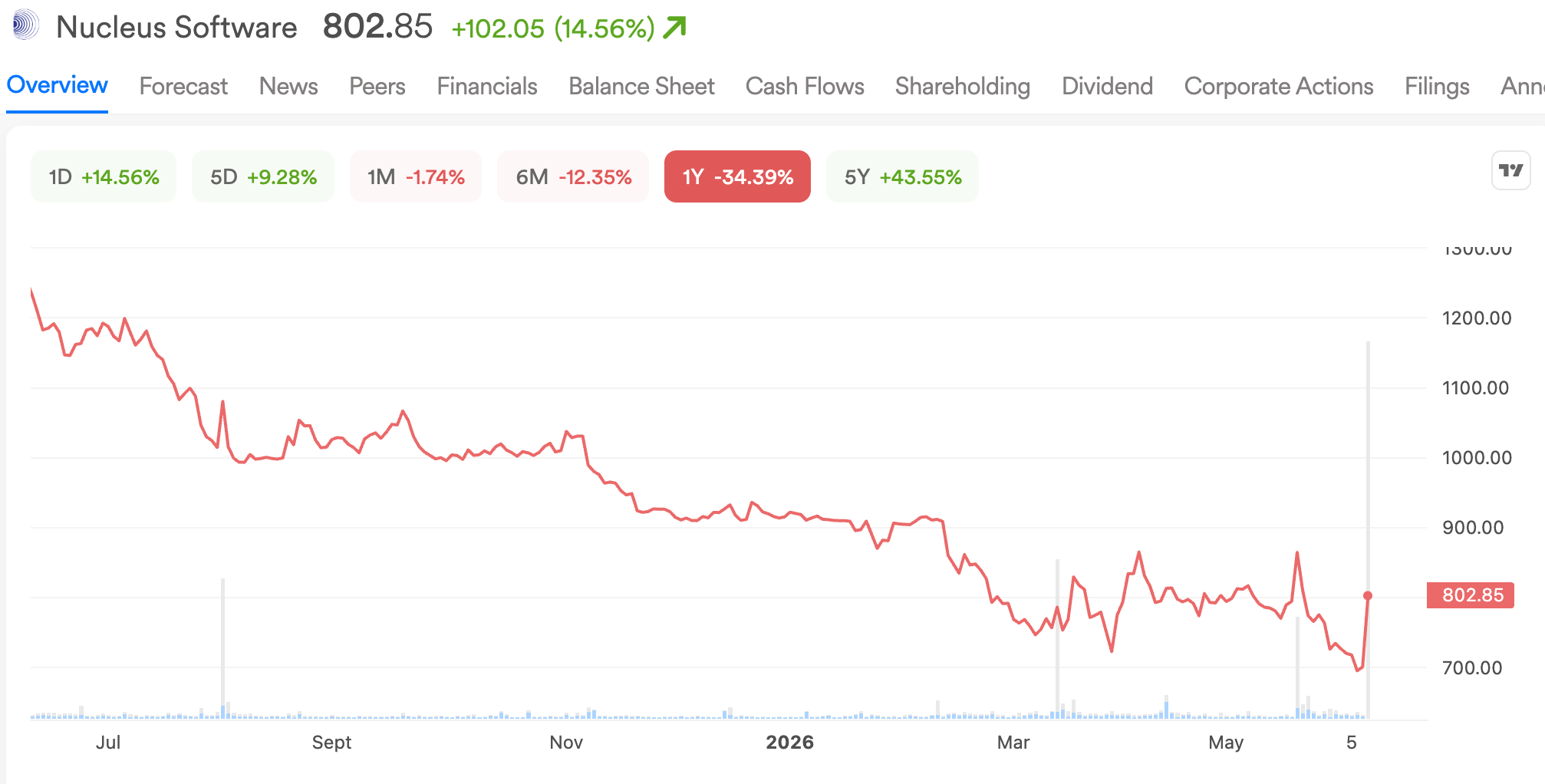
Nucleus Software shares jumped 15% after it partnered with Indonesia-based Azentra Solusi Digital to expand its presence in one of Southeast Asia’s fastest-growing banking markets.
The company provides technology that powers many banking operations behind the scenes. Its platforms help banks manage loans, payments, cash management, and transaction processing.
3. Venture Street hot 🔥
EV charging startup Exponent Energy has raised ₹200 crore in a funding round led by 360 ONE Asset and TDK Ventures as it looks to expand across India and accelerate the adoption of commercial EVs.
Founded in 2020 by Arun Vinayak, the Bengaluru-based company is trying to solve one of the biggest pain points in electric mobility: charging time.
Interestingly, we spoke to Exponent’s founder a while back to understand whether 15-minute EV charging can actually work at scale in India.
While we are on fundraises ⚡️,
AGNIT Semiconductors, a homegrown startup working on Gallium Nitride (GaN) chips, has opened a new advanced testing lab at IISc Bengaluru with an investment of ₹3 crore.
What’s buzzin’: the lab will help AGNIT test and validate its chips in-house, reducing reliance on external facilities and speeding up product development.
These chips are designed for high-power applications in sectors such as defence, telecom & next-gen wireless technologies.
We spoke to the company a few months ago about its big semiconductor ambitions. Watch here 📈

4. India’s biggest brands aren’t on D-street. Why? 👀

You probably use products from these companies every day. But you can’t invest in them.
Amul, Parle, Haldiram’s and Bisleri are some of India’s biggest consumer brands, yet they remain unlisted despite generating thousands of crores in revenue.
The story is less about IPOs and more about ownership.
Some businesses never needed public money to grow, while others chose to prioritise control, independence and long-term decision-making over stock market participation.
5. Why did India change its industrial scorecard? 👀

India just changed its Index of Industrial Production for the first time in 14 years.
Back in 2011, UPI didn’t exist. India wasn’t a major smartphone manufacturing hub. Solar power was still tiny. Rare-earth minerals weren’t a strategic obsession.
Yet until now, India’s industrial growth was still being measured using a framework built around an economy that looked very different.
The revised index now tracks things like CCTV cameras, vaccines, debit cards, renewable energy and rare-earth minerals, while dropping products that no longer reflect how India produces and consumes today.
6. Stocks that kept us interested 🚀
What went up ⬆️
🚧 Afcons Infra rose more than 4% on order win impact worth over ₹5,000 cr.
🧬 Concord Biotech gained more than 4% as the company got US FDA Approval For Tofacitinib which is used to treat autoimmune conditions like Rheumatoid Arthritis.
🧴 HUL ended nearly 2% higher as JPMorgan remained bullish on stable demand outlook.
📈 Bharat Forge shares gained after Chairman Baba Kalyani told CNBC-TV18 that the company is working with three global semiconductor giants on chipmaking equipment.
What went down ⬇️
✈️ IndiGo shares fell marginally after ATF prices rose 10% following the launch of a three-year price stabilisation scheme by fuel retailers.
🔻Gold-linked stocks fell sharply as a steep drop in gold prices hurt sentiment, dragging Muthoot Finance and Manappuram Finance down 3% and 6%, respectively.
What else are we snackin’ 🍿
🛢️ Duty extension: India is considering extending the import tax exemption on key petrochemical products beyond June 30 to ease supply pressures and contain costs for industries affected by the US-Iran conflict.
🛰️ Launch talks: Starlink said it remains in active discussions with the Indian government on its launch plans, dismissing reports that approvals were frozen over security concerns.
🛡️ Defence boost: the Indian Army is reportedly planning a ₹23,000 crore deal for additional K9 Vajra howitzers to strengthen artillery capabilities along the China and Pakistan borders.
💰 SIP inflows: mutual fund SIP inflows eased marginally to ₹30,954 crore in May, while the SIP stoppage ratio fell below 100% for the first time in three months.
That’s a wrap! Don’t let the weekday blues get to you.

And if you’d like to place your brand on this newsletter, let us know.
Hit that 💚 if you liked this issue.
The capital story is the easy half. Jamnagar can stand up a gigawatt of compute in 18 months; the harder line item is who runs depth on top of it. EY's Future of Pay 2026 has Indian AI and cloud skills pulling 30 to 40% increments while commoditized roles sit at 6 to 8% on a 9.1% average. The infra reprices land and power; the labor market is already repricing human depth faster than India produces it, on R&D that is 0.67% of GDP against China's 2.55%. You can pour a gigawatt of concrete in 18 months. You cannot pour a generation of researchers. Curious where you would put the next rupee: another gigawatt, or the depth that makes the first one productive?
Zia. AI career strategist for Indian professionals. itszia.ai